Slow cooker beef stew gets deep, rich flavor from the long simmer, but the butternut squash keeps it from tasting heavy. The beef turns spoon-tender, the broth thickens into a glossy gravy, and the squash holds just enough shape to add sweetness without going mushy. It’s the kind of bowl that tastes like it took all day because, well, it did — without you having to stand over it.
This version works because the beef gets browned first, and that step builds the base flavor the slow cooker can’t create on its own. The flour on the meat helps the gravy thicken naturally, while tomato paste, Worcestershire, thyme, and sage give the broth enough backbone to carry the sweetness of the squash. Adding the squash later keeps it intact, and the kale goes in at the end so it stays vibrant instead of drifting into the stew.
Below, I’ve included the timing detail that keeps the squash from collapsing, plus a few smart swaps if you need to skip the wine or want to change the greens.
The beef was fall-apart tender and the squash held its shape perfectly. I loved that the kale stayed bright at the end instead of turning limp, and the gravy thickened up just right after eight hours.
Save this slow cooker beef stew with butternut squash for a cozy bowl with tender beef, sweet squash, and a rich thyme-sage gravy.
The Browning Step That Gives the Stew Its Backbone
The biggest mistake with slow cooker beef stew is skipping real browning and expecting the pot to develop flavor on its own. It won’t. The browned crust on the beef and the cooked tomato paste in the pan create the savory depth that keeps this stew from tasting flat after hours of gentle cooking.
The flour on the beef does double duty here. It helps the meat sear with a little more color, then it thickens the broth as the stew cooks. If the pan looks dry while browning, that’s a sign the heat is too high; you want a steady sizzle, not burned flour stuck to the bottom.
- Beef chuck — This is the cut that turns tender in a long cook. Leaner stew meat dries out before the vegetables are done.
- Tomato paste — Cooking it for a few minutes takes away the raw edge and turns it into a concentrated flavor base. Don’t stir it in cold and rush past this step.
- Dry red wine — It adds depth and helps loosen the browned bits from the pan. If you skip it, use extra broth, but the stew will be a little less complex.
- Butternut squash — Cut it into larger cubes so it holds up. Smaller pieces soften too fast and disappear into the gravy.
- Kale — Stir it in at the end only. Any earlier and it goes dull and chewy.
What Each Ingredient Is Actually Doing in the Pot
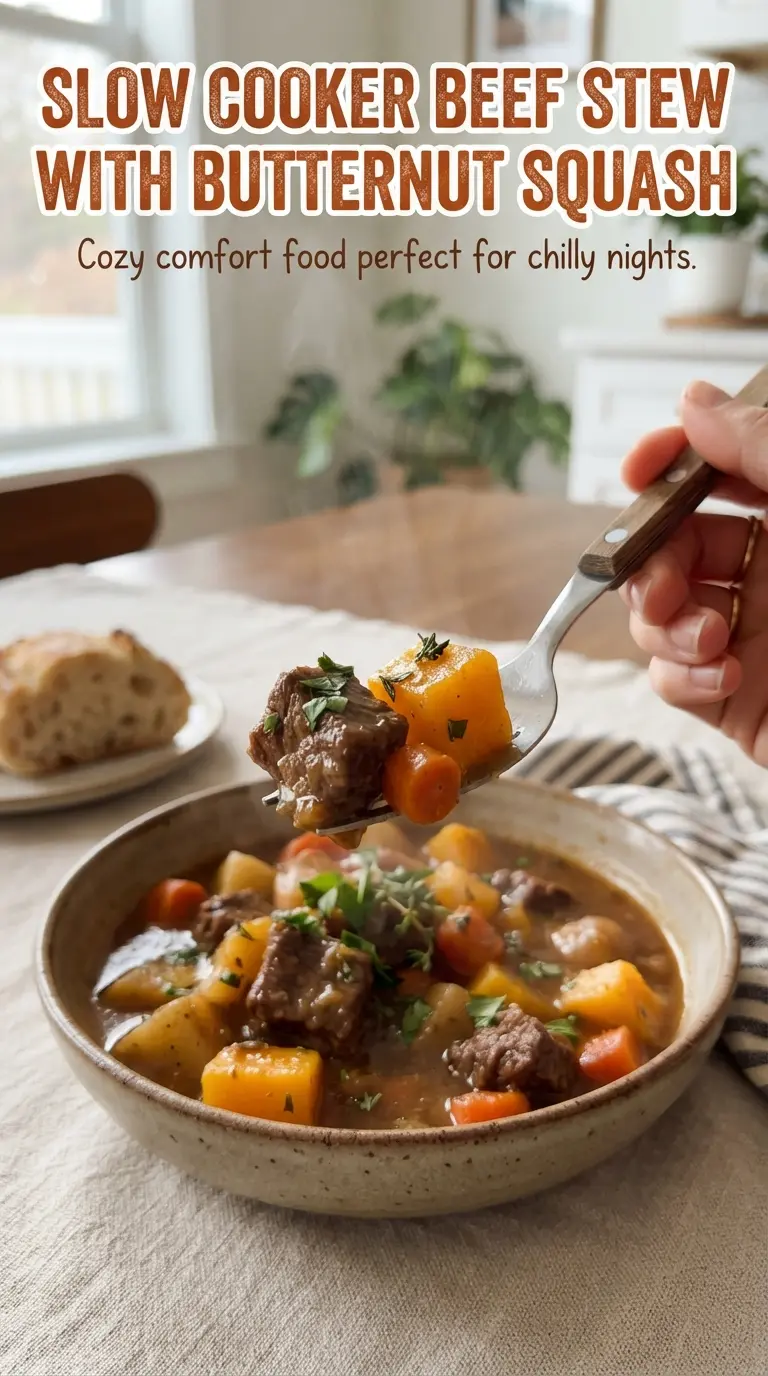
- Beef chuck — The marbling melts slowly and gives you the tender, rich texture you want in a stew. If you swap in a lean roast, the meat can turn stringy before the vegetables are cooked.
- Flour — It lightly coats the beef and helps the stew thicken without needing a separate slurry later. A gluten-free flour blend works here if it’s one designed for baking and thickening.
- Beef broth — This is the main liquid, so use one that tastes good on its own. A thin, salty broth makes a thin, salty stew.
- Red wine — It sharpens the flavor and adds a little acidity, which keeps the broth from tasting one-note. Extra broth works if you don’t cook with wine, but a splash of balsamic vinegar at the end can bring back some of that brightness.
- Butternut squash and carrots — These hold up better than softer vegetables in a long cook and bring natural sweetness that balances the beef. Keep the squash in large cubes and slice the carrots thick so they don’t vanish.
- Kale — It adds color, a little bitterness, and a fresh finish. If you use spinach instead, stir it in at the very end and serve right away.
Building the Stew in the Right Order
Browning the Beef First
Toss the beef with flour, salt, and pepper, then brown it in hot oil in batches if needed. You want a deep brown crust on several sides, not a gray steam. If the pan is crowded, the meat will release moisture and boil instead of sear, and that flavor never comes back later.
Cooking Down the Aromatics
Use the same pan for the onion, garlic, and tomato paste. The onion should soften and pick up the browned bits on the bottom, and the tomato paste should darken slightly before you add the wine. That step builds a thicker, richer base and keeps the stew from tasting watery.
Letting the Slow Cooker Do Its Job
After the broth, Worcestershire, thyme, sage, and carrots go in, cook the stew on LOW for 5 hours before adding the squash. The beef needs that head start to soften properly, and the squash would break down if it sat in there the whole time. Once the squash is added, keep the lid on and let it cook until it’s tender but still intact.
Finishing With the Greens
Stir in the kale during the last 15 minutes so it softens without losing its color. Taste the stew before serving and adjust the salt after the long cook, because the broth reduces and the vegetables absorb seasoning. The finished stew should be thick enough to coat a spoon and glossy enough to cling to the beef.
How to Adapt This Stew When You Need a Different Finish
Skip the Wine Without Losing Depth
Use extra beef broth in place of the wine, then add 1 teaspoon of balsamic vinegar at the end if the stew tastes a little flat. You won’t get the same sharpness the wine gives, but you’ll still keep the broth balanced.
Make It Gluten-Free
Swap the all-purpose flour for a gluten-free all-purpose blend that’s meant for thickening. The coating on the beef won’t brown quite the same way, but the stew will still thicken nicely as it cooks.
Use Spinach Instead of Kale
Spinach softens faster and has a milder flavor, so stir it in right before serving. It won’t have the same chew as kale, but it gives the stew a lighter finish.
How to Store the Leftovers
- Refrigerator: Store in an airtight container for up to 4 days. The stew thickens as it sits, so expect the gravy to look denser the next day.
- Freezer: It freezes well for up to 3 months. Cool it completely before packing it into containers, and leave a little room at the top for expansion.
- Reheating: Warm it gently on the stove over low heat or in the microwave in short bursts, stirring between each one. Don’t boil it hard, or the beef can tighten up and the squash can start to fall apart.
Answers to the Questions Worth Asking
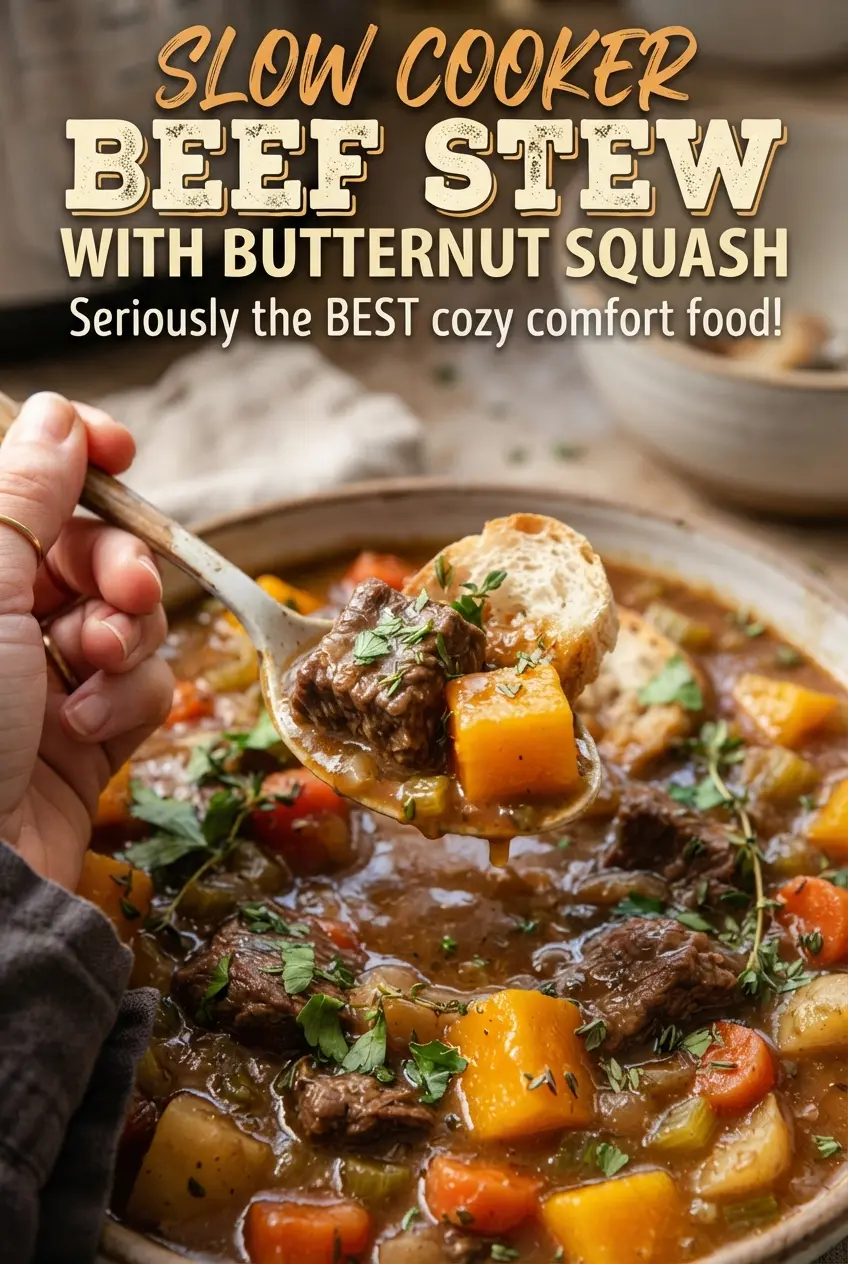
Slow Cooker Beef Stew with Butternut Squash
Ingredients
Equipment
Method
- Toss the cubed beef with flour, salt, and black pepper until evenly coated, then shake off excess. Visual cue: the beef should look lightly dusted all over.
- Heat olive oil in a hot cast iron skillet over medium-high heat, then brown the beef in batches. Cook until browned on the outside, about 2-3 minutes per batch, so the coating turns golden.
- Transfer the browned beef to a slow cooker. Visual cue: scrape any browned bits from the skillet into the cooker for extra flavor.
- In the same skillet, cook the diced onion, minced garlic, and tomato paste for 3 minutes. Visual cue: the onion should soften and the tomato paste should darken slightly.
- Deglaze with the dry red wine (or extra broth) and cook for 1 minute, scraping up browned bits. Visual cue: the liquid should look darker and glossy from the fond.
- Pour the onion-garlic-tomato mixture into the slow cooker. Visual cue: the surface should be speckled with aromatics.
- Add beef broth, Worcestershire sauce, dried thyme, dried sage, and the sliced thick carrots. Stir briefly so the spices are distributed and carrots are submerged.
- Cover and cook on LOW for 5 hours. Visual cue: the carrots should be turning tender and the gravy should look thicker.
- Add the butternut squash cubes, stir to combine, and keep covered. Visual cue: the orange squash will float then settle as it begins to soften.
- Cook on LOW for 2-3 hours more until the beef and squash are tender. Visual cue: a fork should easily pierce a squash cube with little resistance.
- Stir in the chopped kale and cook on LOW for the last 15 minutes, keeping the lid on. Visual cue: the kale should turn bright green and wilt into the stew.
- Season to taste and serve hot. Visual cue: the stew should be bubbling gently with a cohesive, glossy gravy.