
Slow cooker chicken jambalaya comes out rich, smoky, and deeply satisfying, with tender chicken, plump rice, and just enough heat to keep each bite interesting. The slow cooker does the heavy lifting on the base, but the finish matters just as much: adding the rice near the end keeps it from turning soft and muddy. What you get is a bowl that tastes layered, not dumped together, which is exactly why this version earns a repeat spot.
The trick is building flavor before the rice ever goes in. Andouille sausage brings smoke and fat, chicken thighs stay juicy through the long cook, and the Cajun seasoning, thyme, paprika, and cayenne settle into the broth instead of sitting on top of it. I also like using diced tomatoes for body and a little acidity, which keeps the dish from tasting flat after hours in the slow cooker.
Below, I’ve included the small details that keep the rice from overcooking and the seasoning balanced enough to taste bold without turning harsh. If you’ve ever had jambalaya that went mushy or bland, this method fixes both problems.
The rice stayed separate and the chicken was still juicy after the final cook. I’ve had jambalaya turn into a thick mash before, but adding the rice at the end made all the difference.
Like this slow cooker chicken jambalaya? Save it to Pinterest for smoky rice bowls with juicy chicken and andouille.
The Rice Goes In Last for a Reason
Jambalaya fails most often when the rice spends the full cook time sitting in liquid. In a slow cooker, that turns the grains soft on the outside before the center has any chance to stay distinct, and by the end you’ve got something closer to risotto than jambalaya. Adding the uncooked rice at the end gives it just enough time to absorb the seasoned broth without collapsing.
The other thing that matters here is liquid balance. Slow cookers trap moisture, so you don’t need as much broth as you would in a stovetop pot, and the tomatoes add enough body that the finished dish stays spoonable. If your jambalaya ever comes out wet, the usual problem is too much broth at the start, not too little seasoning.
What the Sausage and Chicken Each Bring to the Pot
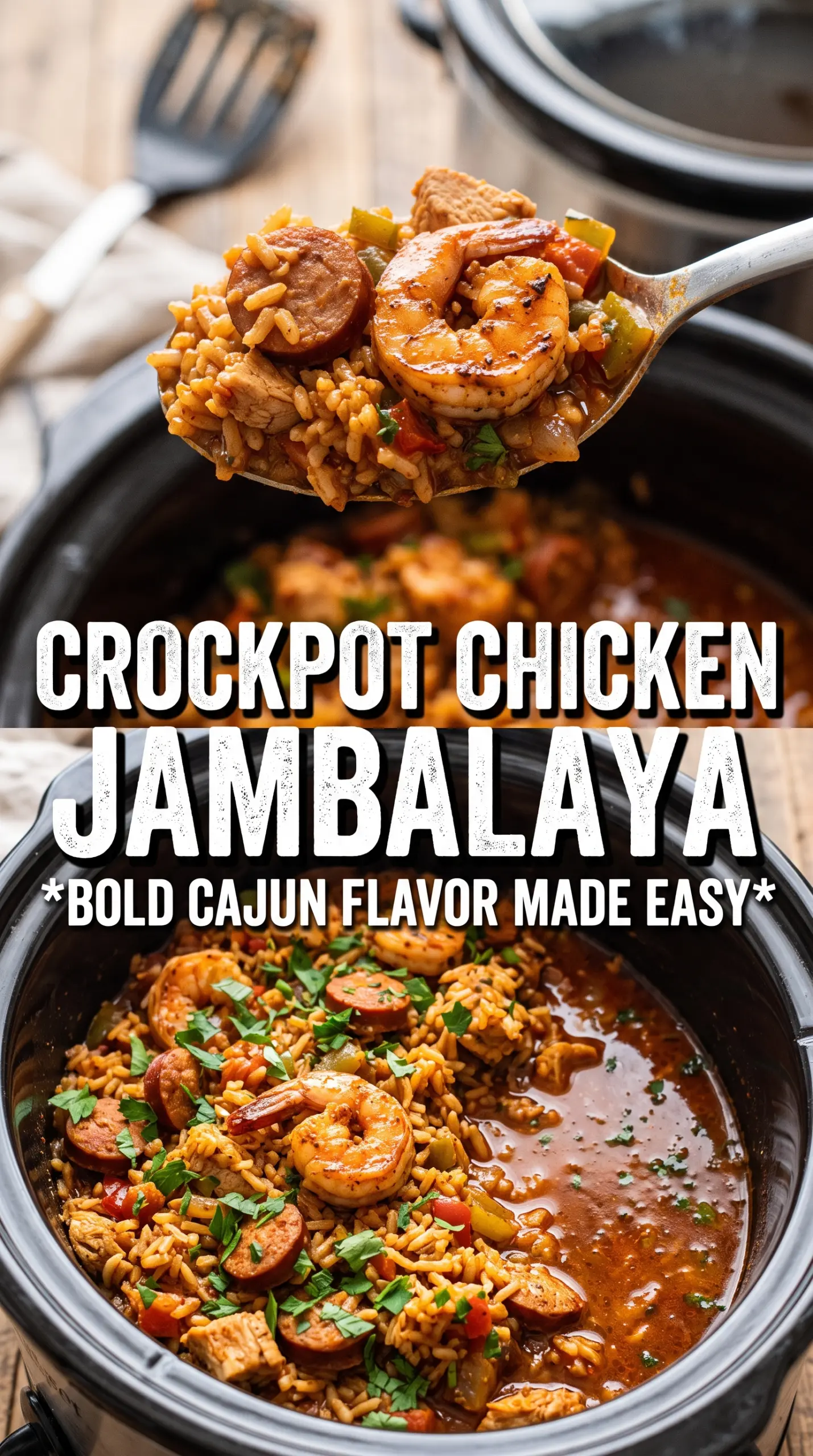
- Chicken thighs — Thighs hold up better than breasts during a long slow cook. They stay tender and shred or chunk cleanly without drying out, which matters because the rice cooks later and the whole dish gets stirred again.
- Andouille sausage — This is where a lot of the smoky backbone comes from. If you swap in a milder smoked sausage, the dish still works, but you’ll lose some of the peppery Cajun edge that makes jambalaya taste like jambalaya.
- Cajun seasoning — Brands vary a lot here. Some are salt-heavy, some are hotter, so taste your blend if you can and remember that the sausage adds salt too. If yours is very salty, pull back slightly and add more at the end if needed.
- Long grain white rice — Use long grain, not instant. It keeps its shape better during the final cook and gives you separate grains instead of a paste. Rinse it only if your brand runs especially starchy; otherwise, dry rice absorbs the liquid in a more predictable way.
- Bell peppers, onion, and celery — This trio is the flavor base, and it needs a fine dice so it softens evenly during the long cook. Big chunks stay too firm and make the texture feel disjointed.
Building the Pot So the Rice Finishes Cleanly
Layer the Seasoned Base
Start by adding the chicken and sausage to the slow cooker, then pile in the onion, peppers, celery, garlic, tomatoes, broth, and seasonings. Stir well enough that the spices are distributed through the liquid, not clumped in one corner. If the seasoning sits on top in a dry patch, it can taste harsh later instead of rounded out. The base should look brothy and colorful, with the chicken mostly submerged.
Cook Until the Chicken Is Tender, Not Dry
Cook on low for 5 to 6 hours or high for about 3 hours, just until the chicken is tender and the vegetables have softened. The chicken should break apart easily with a spoon but still hold some shape. If you cook past that point, the thighs can get stringy, and the peppers turn dull instead of sweet. The goal is cooked through and supple, not falling apart in the liquid.
Add the Rice at the Finish
Stir in the uncooked rice, cover again, and cook on high for 30 to 40 minutes. Watch the texture closely near the end: the grains should be tender and the liquid mostly absorbed, with just a little moisture left to settle after stirring. If the pot still looks soupy when the rice is done, give it another 5 to 10 minutes with the lid on before serving. Stir it too aggressively once the rice is nearly tender and you can break the grains and make the whole pot gummy.
Fluff and Rest Before Serving
Turn off the heat and let the jambalaya sit for 5 minutes before serving. That short rest lets the rice finish absorbing steam and helps the texture tighten up. Then fluff it gently with a fork instead of stirring hard with a spoon. Finish with green onions and parsley for a fresh top note that cuts through the smoky richness.
How to Adapt This Pot When You Need a Different Finish
Make It Dairy-Free and Naturally Gluten-Free
This recipe already fits both of those needs as written, as long as your Cajun seasoning and sausage are gluten-free. Check the sausage label for fillers and the seasoning blend for hidden wheat or maltodextrin sources if that matters for your kitchen. The texture stays the same, so you don’t give anything up by keeping it this way.
Use Chicken Breasts Instead of Thighs
Chicken breasts work, but they need more attention. Cut them into larger chunks and check them early so they don’t dry out before the rice goes in. Thighs give you more forgiveness and a richer result, while breasts land a little leaner and firmer.
Dial Back the Heat Without Losing the Cajun Character
Skip the cayenne or cut it to a pinch if you want more smoke than fire. The sausage and Cajun seasoning still bring plenty of character, and the finished dish will taste balanced instead of sharp. If you want a little heat at the table, add hot sauce to each bowl rather than pushing the whole pot hotter than you need.
Storage and Reheating
- Refrigerator: Store in an airtight container for up to 4 days. The rice will absorb more liquid as it sits, so the texture gets a little thicker by day two.
- Freezer: Freezes well for up to 2 months, though the rice softens slightly after thawing. Cool it completely first, then portion it into containers so it reheats evenly.
- Reheating: Reheat gently on the stovetop or in the microwave with a splash of broth to loosen it. The common mistake is blasting it dry; that tightens the rice and makes the chicken seem tougher than it is.
Questions I Get Asked About This Recipe
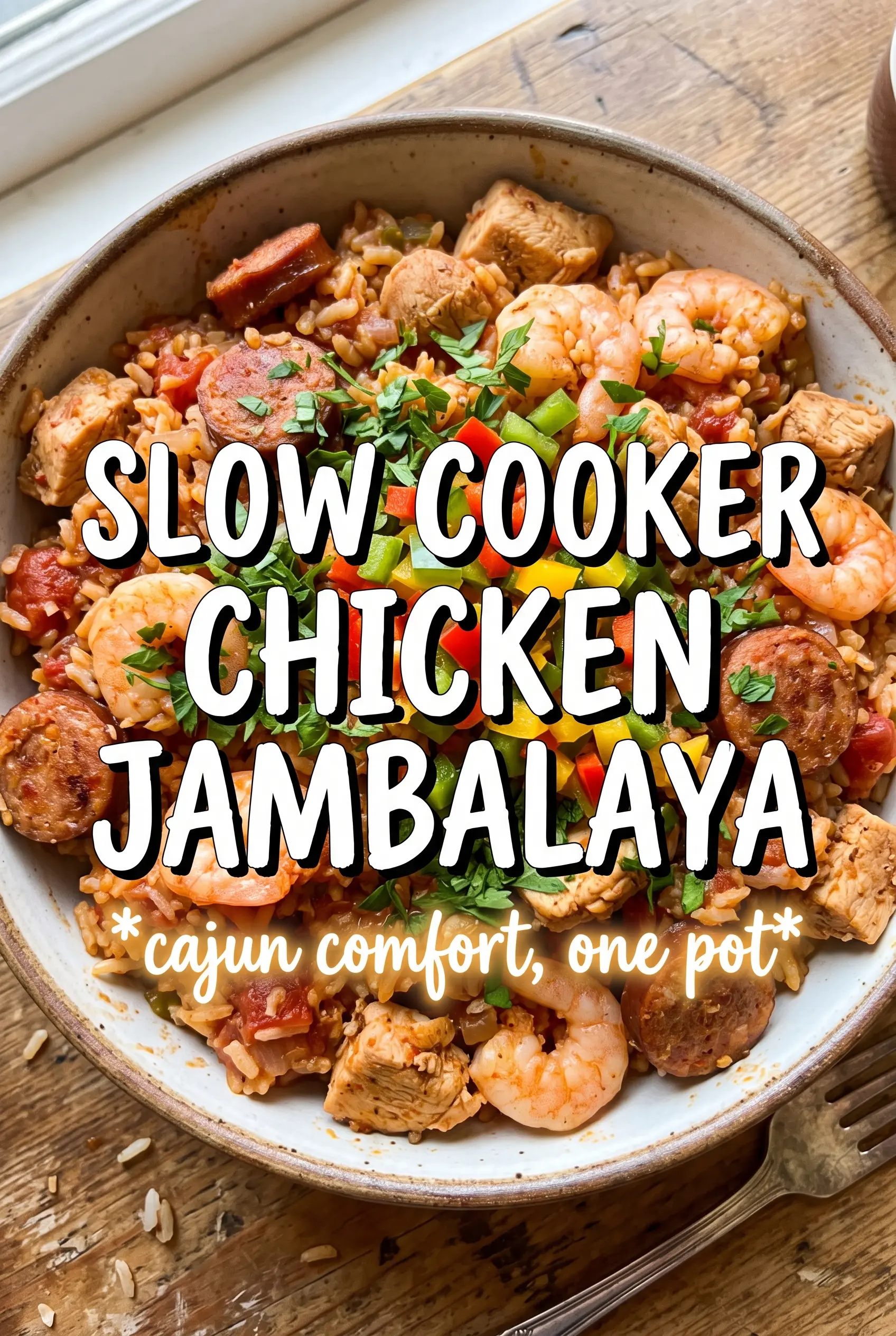
Slow Cooker Chicken Jambalaya
Ingredients
Equipment
Method
- Add the chicken thighs and sliced andouille sausage to the slow cooker.
- Add the diced onion, diced green bell pepper, diced red bell pepper, chopped celery, and minced garlic.
- Add the diced tomatoes, chicken broth, Cajun seasoning, dried thyme, smoked paprika, and cayenne pepper.
- Stir all ingredients in the slow cooker until the seasoning is evenly distributed.
- Cook on low for 5–6 hours, or on high for 3 hours, until the chicken is tender (visible bubbling through the lid indicates the mixture is actively heating).
- Once tender, stir the contents to redistribute the chicken and sausage before adding the rice.
- Stir in the uncooked long grain white rice, then cover the slow cooker.
- Cook on high for 30–40 minutes until the rice has absorbed the liquid and is fully cooked (the surface should look thicker, not soupy).
- Fluff the jambalaya with a fork to separate the rice grains and improve the texture.
- Serve hot, garnished with green onions and fresh parsley (a fresh green garnish over the red-spiced rice is the final visual cue).


