
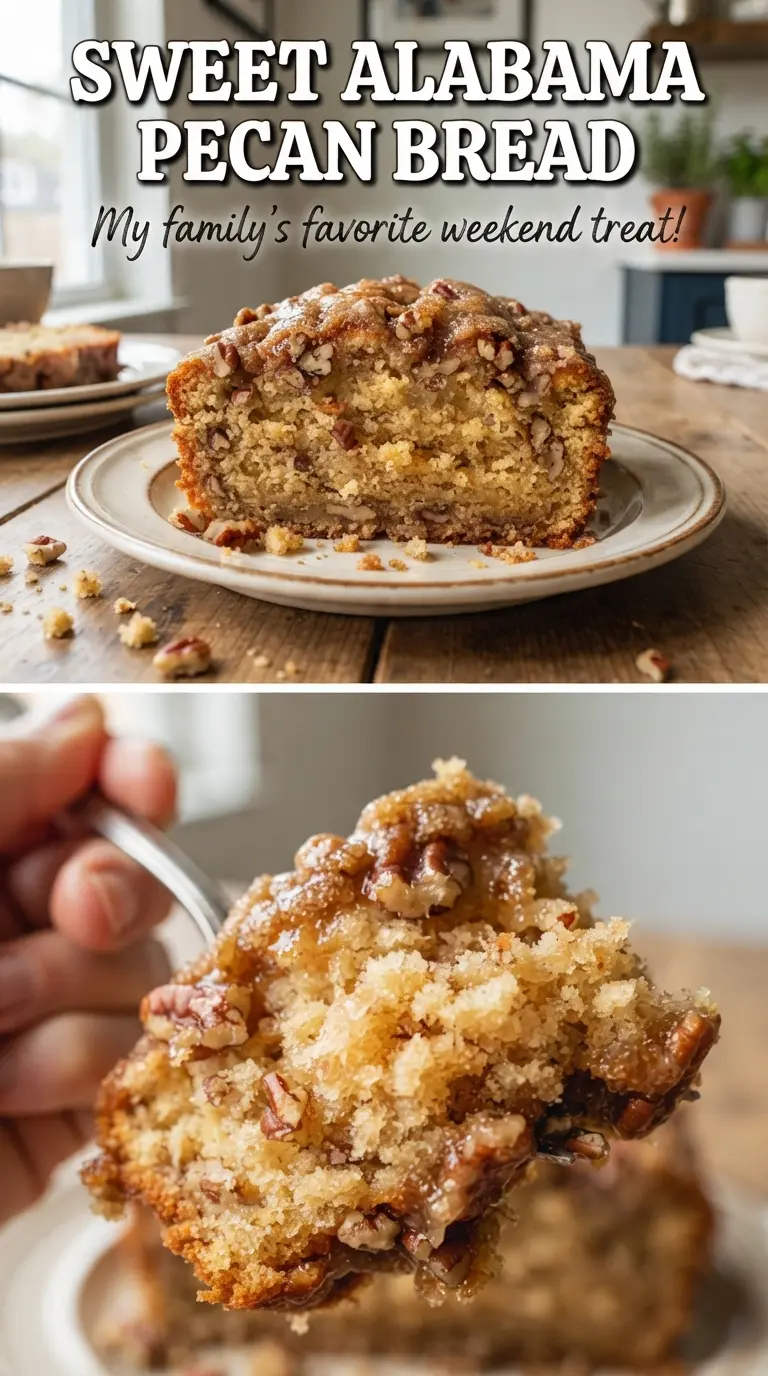
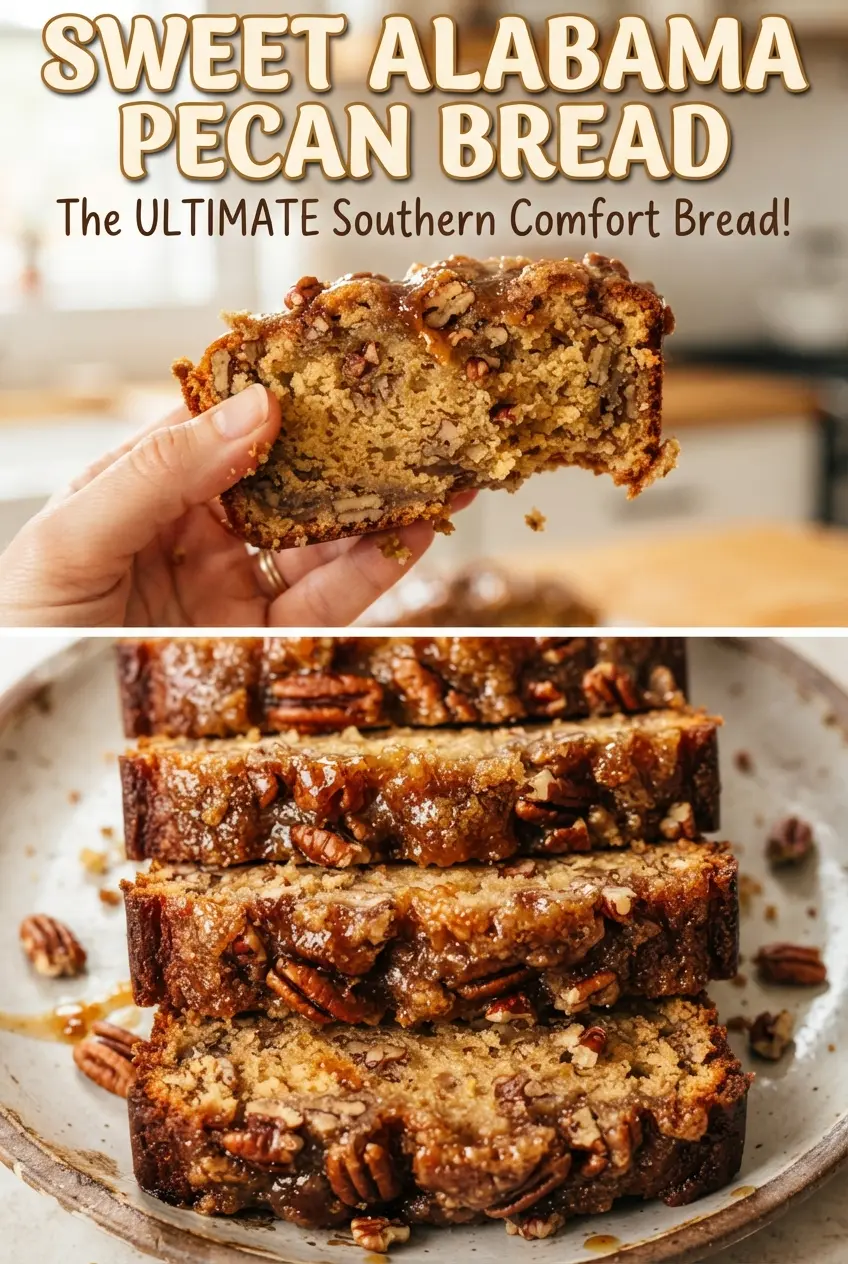
Sweet Alabama Pecan Bread bakes up with a soft, buttery crumb and a crackly, nut-studded top that smells like brown sugar the moment it leaves the oven. The loaf slices cleanly once it cools, but the crumb stays tender and moist, with toasted pecans in every bite and just enough cinnamon to keep the sweetness from feeling flat.
The trick here is in the mixing. Creaming the butter and brown sugar first gives the bread its lift and fine texture, while the buttermilk keeps the crumb soft and adds a gentle tang that plays well with the pecans. Folding the nuts in at the end keeps them from sinking, and that extra sprinkle of brown sugar on top melts into a light, crackly finish.
Below, I’ve included the small details that make this loaf dependable: when to stop mixing, how to keep the top from overbrowning, and a few variations if you want to shift the sweetness or make use of what’s already in your pantry.
The top baked up beautifully crackly and the loaf stayed moist for days. I toasted the pecans first and that made the flavor deeper and much richer than the usual quick bread I make.
Save this Sweet Alabama Pecan Bread for the kind of loaf that slices tender, bakes with a crackly pecan top, and tastes even better the next day.
The Secret to a Quick Bread That Stays Tender Instead of Dense
This loaf lives or dies by how gently you handle the batter. Once the flour goes in, overmixing turns a soft pecan bread into something tough and gummy, and that’s the most common mistake with quick breads like this. Mix just until the streaks disappear, then stop. The batter should look a little rough, not perfectly smooth.
The other thing that matters is oven time. Pecan bread can look done on top before the center finishes setting, especially with the brown sugar and nuts shielding the surface. A tester should come out clean from the center, but if you hit a melted pocket of sugar or pecan, check a second spot before calling it done.
- Buttermilk — This keeps the crumb soft and gives the loaf enough acidity to work with the baking soda. Regular milk won’t give the same tenderness or lift, but plain yogurt thinned with a little milk is the best stand-in if that’s what you have.
- Toasted pecans — Toasting deepens the flavor and keeps the nuts from tasting raw inside the loaf. You can skip the toasting if you’re in a hurry, but the bread will taste flatter. Chopping them after toasting gives you better control over the size and helps them distribute evenly.
- Brown sugar — This brings the caramel note that makes the loaf taste like more than plain nut bread. Light or dark brown sugar both work; dark brown sugar gives a deeper molasses edge.
- Butter — Softened butter creams with the sugar to trap air, which is what gives you that lighter crumb. Cold butter won’t incorporate properly, and melted butter changes the texture into something more muffin-like.
What Each Ingredient Is Actually Doing in This Recipe
- Primary ingredient (the star) — Quality matters most. Choose the best you can find.
- Cooking medium (oil, butter, or broth) — This carries flavors and prevents dryness.
- Seasonings (salt, pepper, spices, herbs) — Layer flavors so nothing overpowers. Build depth gradually.
- Aromatics (garlic, onion, herbs) — Cook with fat to bloom flavors. Become the foundation.
- Supporting ingredients — Complement the main ingredient without overpowering it.
- Sauce or liquid (if applicable) — Brings flavors together. Balance richness with acid.
- Acid (lemon, vinegar, wine, or other) — Brightens and prevents flat-tasting results.
- Final finish (garnish, glaze, or sauce) — Prevents one-dimensional taste and adds visual appeal.
Building the Batter Without Losing the Light Crumb
Creaming the Butter and Sugar
Beat the softened butter and packed brown sugar until the mixture turns paler and looks fluffy around the edges of the bowl. That step is doing real work here; it creates the tiny air pockets that help the loaf rise. If the butter is too cold, the mixture will stay grainy and heavy, so let it soften on the counter until it dents easily under your finger.
Adding the Eggs and Vanilla
Beat in the eggs one at a time so the batter stays smooth and emulsified. If you dump them in together, the mixture can look curdled and lose some of that fluffy texture you just built. The vanilla goes in here too, and it should smell warm and rounded, not sharp or artificial.
Alternating the Dry Ingredients and Buttermilk
Add the flour mixture in batches with the buttermilk, finishing with the dry ingredients. This keeps the batter from tightening up all at once and helps it stay tender. Stop mixing as soon as the flour disappears; a few small streaks are better than beating the batter into submission.
Folding in the Pecans and Topping the Loaf
Fold in one cup of the chopped pecans, then spread the batter into the pan and finish with the remaining pecans and brown sugar on top. That top layer bakes into a light crust that gives each slice a little crunch. Press the topping in very lightly so it sticks, but don’t bury it in the batter or you’ll lose that crackly finish.
Make It More Nutty and Less Sweet
Add another 1/4 cup of pecans to the topping and reduce the brown sugar on top a little if you want a more toasted, less dessert-like loaf. The bread still tastes rich, but the nut flavor comes forward and the finish feels a little less sticky.
Dairy-Free Version
Use a good plant-based butter and replace the buttermilk with unsweetened non-dairy milk mixed with 1 tablespoon lemon juice or vinegar. The loaf will still bake up tender, though the flavor will be a little less rich and the crumb slightly lighter.
How to Turn It Into Mini Loaves or Muffins
Divide the batter among smaller pans or muffin cups and start checking early, since the edges brown faster in smaller bakes. You’ll get more crust and a slightly shorter bake time, which is handy when you want grab-and-go slices or individual portions for freezing.
Storage and Reheating
- Refrigerator: Store tightly wrapped for up to 5 days. The crumb stays moist, though the topping softens a bit after the first day.
- Freezer: This freezes well. Wrap the cooled loaf or individual slices in plastic, then foil, and freeze for up to 3 months.
- Reheating: Warm slices in a low oven or toaster oven until just heated through. A microwave works in a pinch, but too much heat turns the crumb rubbery and dulls the pecan topping.
Answers to the Questions Worth Asking
Sweet Alabama Pecan Bread
Ingredients
Equipment
Method
- Preheat oven to 350F and grease and line a 9x5-inch loaf pan.
- Visually confirm the pan is coated, so the loaf will release cleanly after baking.
- Whisk all-purpose flour, baking powder, baking soda, salt, and ground cinnamon until evenly combined.
- Stop whisking when the spices look uniformly speckled through the flour mixture.
- Beat softened butter and packed brown sugar until fluffy, then beat in eggs one at a time and mix in vanilla extract.
- Mix just until smooth and lighter in color, with no visible streaks of egg.
- Add dry ingredients alternately with buttermilk, mixing just until combined to keep the batter tender.
- Stop stirring as soon as no dry flour pockets remain.
- Fold in 1 cup of the toasted pecans, then pour the batter into the loaf pan.
- Fold only until the pecans are evenly distributed, then level the surface lightly.
- Top with remaining pecans and sprinkle 2 tablespoons brown sugar over the loaf.
- Aim for an even layer so the topping crackles across the whole surface.
- Bake at 350F for 55-60 minutes, until a toothpick comes out clean.
- Look for a deep golden-brown top and set center before testing.
- Cool for 15 minutes in the pan before slicing to prevent the crumb from tearing.
- After 15 minutes, the loaf should feel firm enough to slice cleanly.


