
Well-seasoned taco meat turns plain ground beef into the kind of filling that disappears fast from the skillet. The meat stays juicy, the spices bloom in the fat, and the tomato paste gives the sauce enough body to cling to every crumble instead of sliding to the bottom of the pan. That’s what makes this version worth keeping on repeat: it tastes like taco night should taste, with just enough richness to work in tacos, burritos, nachos, or stuffed peppers.
The key is building flavor in two stages. First, the beef gets browned hard enough to pick up color, which gives you a savory base before any seasoning goes in. Then a small amount of water loosens the spices and tomato paste into a quick sauce that thickens as it simmers. If you’ve ever ended up with bland, dry taco meat, it usually means the seasoning went in too late or there wasn’t enough liquid for it to coat the meat properly.
Below, you’ll find the exact cues for when the sauce is thick enough, plus a few smart swaps and storage notes so you can make this once and use it all week.
I loved how the sauce actually coated the beef instead of pooling in the skillet. The tomato paste made it taste richer, and it was still juicy when I used the leftovers for quesadillas the next day.
Save this taco meat for quick taco nights, burrito bowls, and quesadillas when you want seasoned beef that stays juicy and coated in sauce.
The Reason Taco Meat Stays Juicy Instead of Drying Out
The biggest mistake with taco meat is cooking the seasoning into dry beef after all the moisture is gone. Once that happens, the spices cling unevenly and the texture turns sandy. The fix is to leave a little fat in the pan, then add water and tomato paste so the seasoning has something to dissolve into before it tightens up around the meat.
Tomato paste does more than color the beef. It deepens the savory flavor and gives the finished taco meat a glossy, slightly saucy finish. If your pan looks dry before the three-minute simmer is up, the heat is too high. Drop it to medium-low and let the liquid reduce slowly so the beef stays tender and coated.
What Each Ingredient Is Doing in the Skillet
- Ground beef — This is the backbone of the dish, and the fat content matters. An 80/20 blend gives the best balance of flavor and moisture; leaner beef works, but it needs a little more attention because it can dry out faster. If you use very lean beef, leave the full 1 to 2 tablespoons of drippings in the pan.
- Taco seasoning — This brings the chili, paprika, onion, and salt notes that define taco meat. A store-bought packet works fine here, but if yours is salt-heavy, hold back on extra salt until the end. Homemade seasoning works too as long as it has enough cumin and chili powder to stand up to the beef.
- Tomato paste — This is what gives the sauce body. You don’t need much, but you do need it if you want the seasoning to coat the meat instead of disappearing into the fat. If you skip it, the result tastes flatter and a little more one-dimensional.
- Cumin, garlic powder, and cayenne — These deepen the seasoning so the meat tastes more layered than a one-note packet mix. The cayenne is optional in the sense that you can reduce it, but it’s what gives the beef a little edge. If you want milder taco meat, cut it in half instead of omitting it completely.
- Water — It looks small, but it’s the ingredient that helps the seasoning dissolve and spread across every crumble. You want just enough to make a loose sauce at first; too much and the beef starts to simmer instead of glaze.
How to Build the Sauce So It Clings to Every Crumble
Getting the Browning Right
Cook the ground beef over medium-high heat and break it up as it cooks, but don’t stir it every second. Let some of the meat sit against the hot pan long enough to pick up browned edges, because that’s where the deeper flavor starts. If the pan fills with liquid, the beef is steaming instead of browning, so raise the heat a touch and keep cooking until the moisture cooks off.
Turning the Seasonings Into a Sauce
Once the excess fat is drained, add the water, taco seasoning, tomato paste, cumin, garlic powder, and cayenne. Stir until the paste disappears into the liquid and you can see the meat evenly coated. This is the stage where the dish can go wrong if the heat is too high; a hard boil cooks the liquid off before the spices have time to settle into the beef.
Letting It Thicken
Simmer the mixture for 3 to 5 minutes, stirring once or twice, until the sauce looks glossy and just barely pools between the crumbles. You’re looking for a coating, not soup. If the pan starts to look dry before the meat is fully seasoned, add a tablespoon or two of water and keep going until the sauce loosens and tightens again.
Final Taste Adjustment
Take a quick bite and season with salt and pepper only after the sauce has reduced. Taco seasoning blends vary a lot, and some already carry enough salt to finish the dish. If the beef tastes flat, a pinch of salt wakes it up immediately; if it tastes sharp, it usually just needs another minute of simmering to round out the spices.
How to Adapt This Taco Meat Without Losing the Good Part
Make it with ground turkey
Ground turkey works well if you want a lighter filling, but it needs a little help because it doesn’t bring the same built-in richness as beef. Leave a small amount of fat in the pan if there is any, and don’t skip the tomato paste. The finished meat will be a little leaner and softer, with a cleaner flavor that still holds onto the seasoning.
Lower-heat taco meat
For milder heat, leave out the cayenne and use a mild taco seasoning. The beef will still taste layered because the cumin and tomato paste carry enough depth on their own. If you want a little warmth without noticeable burn, add just a pinch of cayenne at the end instead of cooking it in.
Gluten-free taco meat
This recipe is naturally gluten-free as long as your taco seasoning blend is certified gluten-free. That label matters because some packets use fillers or anti-caking agents that can introduce gluten. The cooking method doesn’t change at all, which makes this one of the easiest dishes to keep gluten-free without sacrificing flavor.
Storage and Reheating
- Refrigerator: Store in an airtight container for up to 4 days. The flavor gets a little deeper after a day, and the sauce may thicken as it chills.
- Freezer: Freezes well for up to 3 months. Cool it completely, pack it flat in a freezer-safe bag or container, and thaw in the fridge before reheating.
- Reheating: Warm gently in a skillet over medium-low heat with a splash of water if needed. The common mistake is blasting it in a dry pan, which makes the beef taste tough and the seasoning taste dusty instead of saucy.
Answers to the Questions Worth Asking
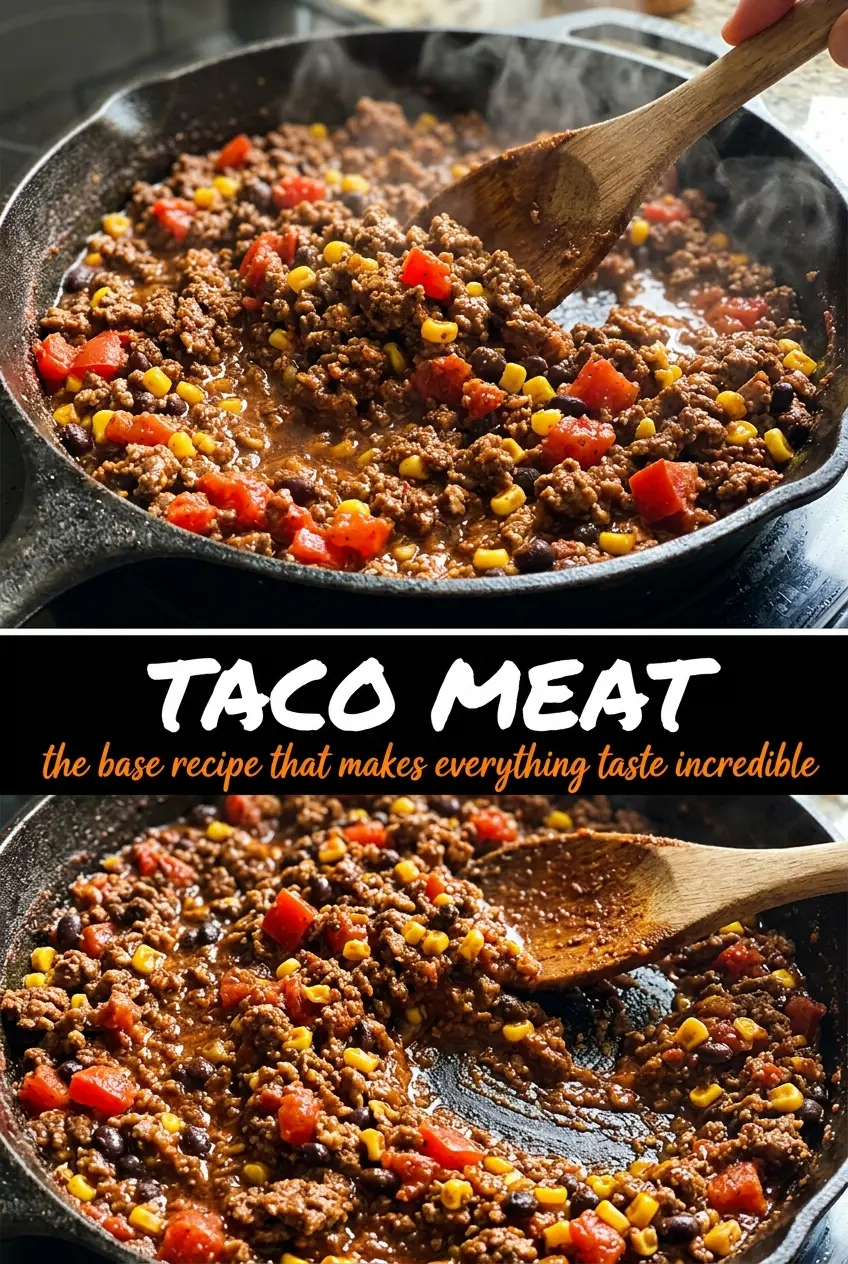
Taco Meat
Ingredients
Equipment
Method
- Heat a large skillet over medium-high heat. Add the ground beef and cook for 5-7 minutes, breaking it into small crumbles as it browns, until no longer pink.
- Drain off excess fat from the skillet, leaving about 1-2 tablespoons to keep the meat juicy and saucy.
- Add the water, taco seasoning, tomato paste, cumin, garlic powder, and cayenne pepper to the skillet. Stir well to combine and coat the beef in the spices.
- Simmer for 3-5 minutes, stirring occasionally, until the sauce thickens and clings to the meat with a glossy coating.
- Season with additional salt and pepper to taste. Stir and cook for 30 seconds just to distribute the seasoning.
- Use immediately as a taco meat filling for tacos, burritos, quesadillas, or other Mexican dishes. Spoon the browned spiced meat with sauce into your tortillas.
- Cool completely, then store in an airtight container in the refrigerator for up to 4 days. Reheat in a skillet over medium heat until hot throughout, stirring to loosen the sauce if needed.


