
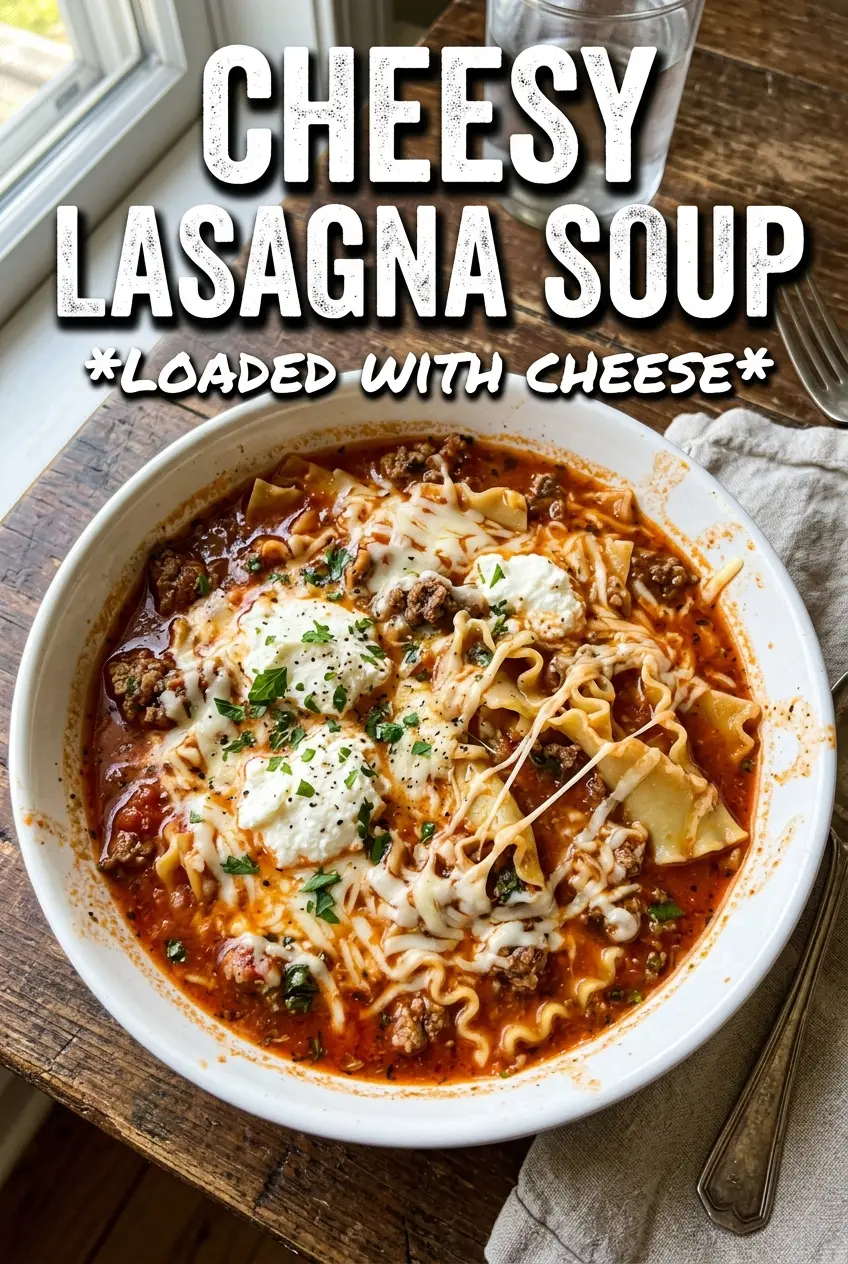
Cheesy lasagna soup has all the comfort of a baked pan of lasagna, but it lands in a bowl with less waiting and none of the layering fuss. The broth turns rich and tomato-forward, the noodles soften just enough to give you that familiar lasagna bite, and the cheeses melt into the pot and onto each bowl in a way that feels generous without being heavy. It’s the kind of dinner that tastes like you spent all afternoon on it, even though it comes together in about 45 minutes.
What makes this version work is the order of the ingredients. The sausage gets browned first so the pot starts with real flavor, then the tomato paste cooks with the onions and garlic long enough to lose that raw edge and deepen the base. The cream cheese goes in off the heat, which keeps the broth smooth instead of grainy, and the ricotta gets added at the end in spoonfuls so each bowl has that lasagna finish instead of disappearing into the soup.
If you’ve ever wanted lasagna night with less effort and more spooning, this recipe is the one to keep close. Below, I’ve laid out the small details that keep the noodles tender, the broth balanced, and the cheese as creamy as it should be.
The noodles stayed tender without getting mushy, and the cream cheese melted into the broth instead of clumping. My husband went back for a second bowl and said it tasted like lasagna in soup form.
Love a bowl of cheesy lasagna soup with sausage and basil? Save it to Pinterest for the nights when you want lasagna flavor without the layering.
The Reason the Broth Stays Rich Instead of Watery
The biggest mistake with lasagna soup is treating it like tomato soup with noodles dropped in at the end. That gives you thin broth and broken noodles that taste disconnected from the rest of the bowl. This version builds the base in stages: sausage for fat and seasoning, tomato paste for depth, then broth and tomatoes for body. By the time the noodles go in, the soup already tastes like something that has been simmering for hours.
The other thing that matters is heat control at the finish. Cream cheese and shredded mozzarella melt cleanly when the pot is off the burner or only barely warm. If you boil the soup after the dairy goes in, it can turn greasy or grainy. Pulling the pot off the heat before stirring in the cheese keeps the broth silky and gives you that stretchy, spoon-clinging texture people want from lasagna in soup form.
What Each Ingredient Is Actually Doing in This Bowl

- Italian sausage — This is the main seasoning for the soup, not just the protein. Use hot or mild depending on how much heat you want, and drain excess fat if there’s a lot so the broth doesn’t turn greasy.
- Tomato paste — This is what gives the broth that cooked-down, lasagna-like depth. Let it sizzle with the onion and garlic for a minute or two; that quick step removes the raw, tinny edge and makes the tomato flavor taste rounder.
- Crushed tomatoes — They give the soup body without making it chunky in the wrong way. If all you have are diced tomatoes, blend them briefly first so the broth still feels smooth and spoonable.
- Beef broth — Beef broth gives the soup a deeper base than chicken broth. Chicken broth works in a pinch, but the finished soup tastes lighter and a little less like classic red-sauce lasagna.
- Lasagna noodles — Break them into uneven pieces so you get that rustic, scoopable feel. Add them only after the broth is boiling; if they go in too early, they’ll soften past the point where they still feel like lasagna noodles.
- Cream cheese, ricotta, mozzarella, and parmesan — Each cheese plays a different role. Cream cheese smooths the broth, ricotta gives you that creamy lasagna topping, mozzarella adds melt and stretch, and parmesan brings salty finish. Shred the mozzarella yourself if you can, because pre-shredded cheese doesn’t melt as cleanly.
- Fresh basil — Don’t skip this at the end. It cuts through the richness and keeps the bowl from tasting flat.
Building the Soup So the Cheese Melts Smoothly
Brown the Sausage First
Cook the sausage in a large pot until it’s no longer pink and the edges pick up some color. Those browned bits at the bottom are flavor, so don’t rush this stage. If the sausage gives off a lot of fat, spoon off the excess before you add the onion. Too much grease can keep the broth from tasting clean.
Cook Down the Tomato Base
Add the onion and let it soften until it looks glossy and smells sweet, then stir in the garlic and tomato paste. Cook that mixture for about 2 minutes. The tomato paste should darken a shade and coat the onion; that’s when the raw edge is gone. If the garlic starts browning hard, the heat is too high and the base will taste bitter.
Simmer the Noodles in the Broth
Pour in the tomatoes, broth, seasoning, and pepper flakes, then bring everything to a boil before adding the broken noodles. Keep the simmer gentle so the noodles cook evenly without falling apart. Stir once or twice so they don’t clump at the bottom. Pull them from the heat when they’re just tender, because they’ll keep softening in the hot broth.
Finish with Cheese Off the Heat
Take the pot off the burner before adding the cream cheese and half the mozzarella. Stir until the cream cheese disappears into the broth and the soup looks creamy instead of streaky. Then ladle it into bowls and top each serving with ricotta, the remaining mozzarella, and parmesan. The toppings should melt into soft pockets, not fully vanish.
Three Ways to Change the Bowl Without Losing the Point
Make It Vegetarian with Lentils
Swap the sausage for cooked brown lentils or a plant-based Italian crumble. Lentils give the soup body and a little chew, though you’ll lose some of the rich, savory depth that sausage brings. If you go this route, taste the broth at the end and add a bit more parmesan or salt to bring the flavor back into focus.
Make It Gluten-Free
Use gluten-free lasagna noodles or another sturdy gluten-free pasta shape. Cook them just until tender, because many gluten-free pastas soften fast and can turn crumbly if they sit too long in the broth. If you want the best texture, keep the pasta slightly underdone before you stir in the cheeses.
Make It Lighter Without Losing the Creamy Finish
Use turkey Italian sausage and reduce the cream cheese to 1/4 cup. The soup will still be satisfying, but the broth will taste a little leaner and less rich. I’d keep the parmesan and ricotta as written, since those cheeses carry a lot of the lasagna character.
Storage and Reheating
- Refrigerator: Store in an airtight container for up to 4 days. The noodles will absorb some broth, so expect the soup to thicken.
- Freezer: Freeze the soup without the ricotta topping for up to 2 months. The noodles soften more after thawing, so for the best texture, freeze the broth and sausage mixture before adding pasta if you know you’ll want leftovers.
- Reheating: Warm it gently on the stovetop over low heat with a splash of broth or water. High heat can make the dairy separate and can push the noodles past tender into mushy.
Questions I Get Asked About This Recipe
Cheesy Lasagna Soup
Ingredients
Equipment
Method
- Brown Italian sausage in a large pot over medium-high heat, then drain the fat once browned and no longer pink. You should see browned crumbles and reduced excess grease in the pot.
- Sauté onion for 4 minutes, stirring until softened. Then add garlic and tomato paste and cook 2 minutes, until fragrant and darkened slightly.
- Add crushed tomatoes, beef broth, Italian seasoning, and red pepper flakes, then bring the soup to a boil. Look for active bubbling across the surface.
- Add broken lasagna noodles and simmer for 10-12 minutes until tender. The noodles should be softened but still hold their shape.
- Remove from heat and stir in cream cheese and half the shredded mozzarella until melted. The soup should look creamy and glossy with no cream cheese streaks.
- Season with salt and pepper to taste, stirring until evenly distributed. Taste and adjust until the flavors pop.
- Serve in bowls and top each with a spoonful of ricotta, a handful of remaining mozzarella, and a sprinkle of parmesan. The cheese should sit on top and begin to soften as it contacts the hot soup.
- Garnish with fresh basil before eating. Add a small pinch for bright green flecks on each bowl.


