
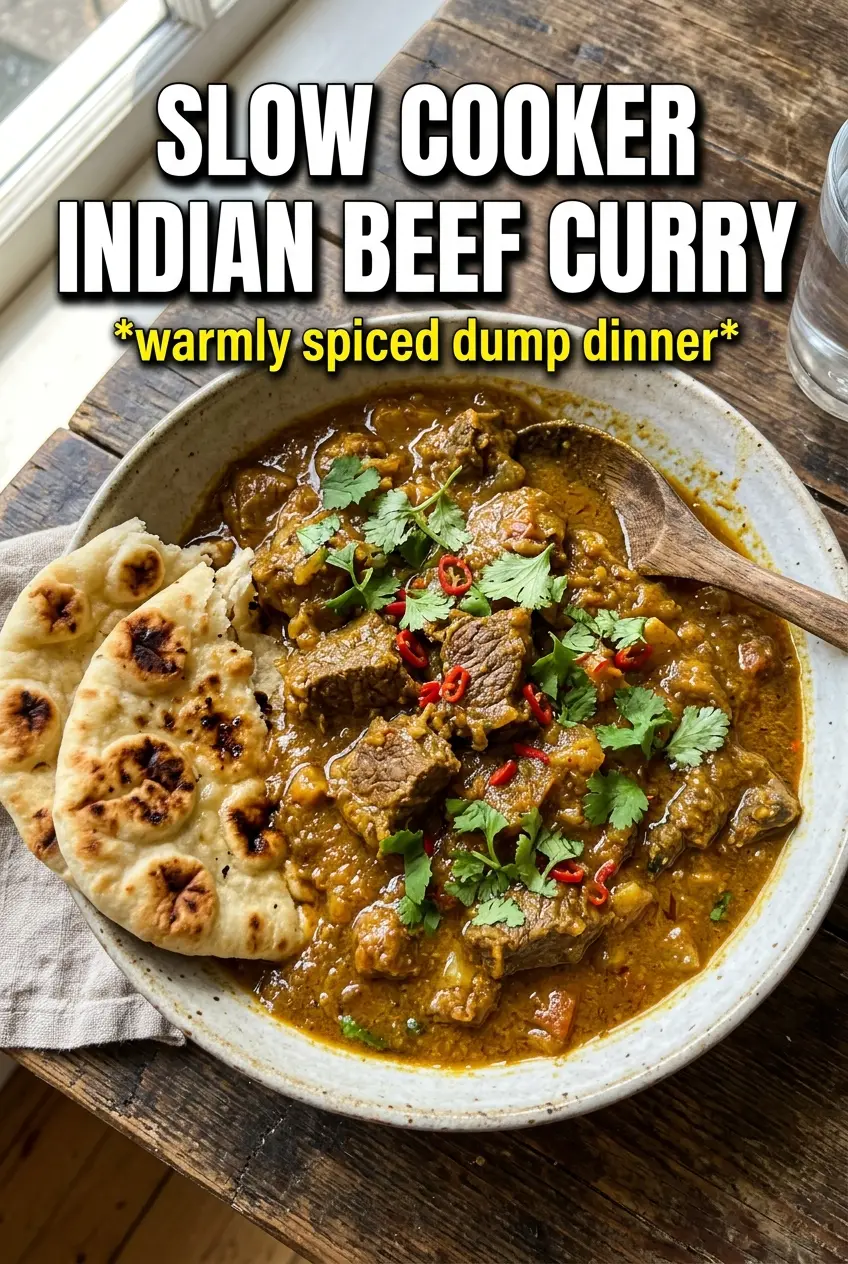
Slow Cooker Indian Beef Curry turns out rich, deeply spiced, and spoon-tender, with beef that holds its shape until you nudge it with a fork. The sauce gets a layered, savory finish from tomatoes, garam masala, ginger, and cumin, then rounds out with yogurt at the end so it stays creamy instead of turning dull or heavy. Served over basmati rice, it’s the kind of dinner that tastes like it took all day because, well, it did — just not much of it from you.
The part that makes this version work is timing. The beef needs the slow, steady heat to soften, but the yogurt goes in near the end so it can enrich the sauce without curdling. I also like blooming the spices right in the slow cooker with the tomato and broth mixture, which keeps the curry from tasting flat or dusty. A little sugar helps the tomatoes and spices land in the same place instead of fighting each other.
Below, I’ve included the ingredient notes that matter most, plus the one finishing move that keeps the sauce smooth and balanced. If you’ve ever had a slow cooker curry come out watery or harsh, the details here will help.
The beef was fall-apart tender and the sauce thickened up beautifully after the yogurt went in. I served it with basmati rice and naan, and the whole pot disappeared the first night.
Save this Slow Cooker Indian Beef Curry for nights when you want tender beef, a creamy tomato-spice sauce, and almost no hands-on work.
The Part That Keeps the Sauce Creamy Instead of Broken
Slow cooker curries can go sideways when dairy gets heated too long. Yogurt is the ingredient that gives this dish its rounded, creamy finish, but it belongs at the end, not at the beginning. If it cooks for hours, it can split and turn grainy, which changes the whole texture of the sauce.
The other reason this recipe works is that the spice blend gets mixed in early enough to flavor the beef, but the fresh dairy waits until the last 30 minutes. That gives the curry time to mellow without losing the bright tang that makes it taste finished. The result is a sauce that clings to the meat and rice instead of sitting thinly at the bottom of the bowl.
What Each Ingredient Is Actually Doing in This Curry

- Beef stew meat — This cut needs time, but that’s the point. The long cook breaks down the connective tissue and gives you tender, shreddable beef. Chuck roast cut into chunks works just as well if you want a slightly richer result.
- Onion, garlic, and ginger — These three build the base of the curry. Fresh ginger matters here; dried ginger won’t give the same sharp warmth. Dice the onion finely so it softens into the sauce instead of staying chunky.
- Garam masala, curry powder, cumin, coriander, turmeric, and cayenne — This blend creates the depth and heat. Garam masala brings the warm finish, while curry powder adds broader spice notes. If you want less heat, cut the cayenne in half; don’t skip it entirely unless you need a very mild curry.
- Diced tomatoes and beef broth — Tomatoes provide acidity and body, and the broth keeps the slow cooker from running too thick too soon. If you only have low-sodium broth, that’s fine; just taste carefully before adding extra salt at the end.
- Plain full-fat yogurt — Full-fat yogurt is the safest choice because it’s less likely to curdle and gives the sauce a silkier texture. Low-fat yogurt can work, but stir it in gently and don’t let the curry boil after it goes in.
- Sugar — Not enough to make it sweet, just enough to soften the tomatoes and keep the spices from tasting harsh. It’s a small amount, but it helps the sauce taste balanced instead of sharp.
How to Build the Curry So It Stays Rich All the Way Through
Layer the Beef and Aromatics First
Start with the beef in the slow cooker, then add the onion, garlic, ginger, tomatoes, broth, and oil. The beef doesn’t need searing for this version, but it does need to be coated in the liquid and aromatics so the flavor has somewhere to go during the long cook. If the onion is cut too large, it stays obvious in the finished dish, so keep it fine and even.
Let the Spices Hit the Liquid, Not the Heat
Stir the dry spices together before adding them so they distribute evenly instead of clumping in one corner of the pot. Once they’re mixed in, the sauce should look a little muddy and fragrant, not streaky or dry. If you see pockets of powder sitting on top, stir again before turning the cooker on.
Cook Until the Beef Gives Without Falling Apart Too Early
Low for 7 to 8 hours gives the most even texture, though high for about 4 hours works if you’re short on time. The beef is ready when it pulls apart easily with a fork but still has enough structure to sit in a bowl without dissolving. If it feels chewy, it needs more time; slow cooker beef almost never gets tough from cooking too long, only from stopping too soon.
Finish With Yogurt Off the Hard Heat
Stir the yogurt in during the last 30 minutes and keep the lid on so the sauce warms gently. This is the point that saves the curry from breaking. If the pot is boiling hard when the yogurt goes in, pull it back to warm or low and stir slowly until the sauce turns creamy and even.
How to Change This Curry Without Losing What Makes It Good
Make It Dairy-Free
Swap the yogurt for full-fat coconut milk stirred in at the end. You’ll lose the tang that yogurt brings, but you’ll gain a softer, slightly sweeter finish that still feels rich. Add a squeeze of lemon at the table if you want to bring back some brightness.
Use Chicken Instead of Beef
Boneless chicken thighs work best here if you want a faster, lighter curry. Cut the cook time down to 4 to 5 hours on low, since chicken dries out long before beef does. The sauce will still be flavorful, but it won’t have the same deep, slow-cooked richness.
Make It Gluten-Free
This recipe is naturally gluten-free as written, as long as your broth and curry powder are certified gluten-free. That matters more than people expect, since some spice blends and broths hide wheat-based additives. Serve it with rice instead of naan if you want to keep the whole meal gluten-free.
Stretch It for More Servings
Add an extra onion and a second can of tomatoes if you want more sauce without making the curry feel thin. The beef will still carry the dish, but you’ll have enough sauce for generous rice portions and leftovers. Keep the spice amounts the same unless you want the larger batch to taste bolder.
Storage and Reheating
- Refrigerator: Keep in an airtight container for up to 4 days. The flavor deepens overnight, and the sauce may thicken a bit as it chills.
- Freezer: It freezes well for up to 3 months, but the yogurt can soften slightly after thawing. Freeze in portions and thaw overnight in the refrigerator for the smoothest texture.
- Reheating: Warm gently on the stove over low heat or in the microwave at medium power. Don’t let it boil, or the yogurt sauce can separate and turn grainy.
Answers to the Questions Worth Asking
Slow Cooker Indian Beef Curry
Ingredients
Equipment
Method
- Add the beef stew meat to the slow cooker. Spread it out so the pieces sit in an even layer.
- Add the onion, garlic, ginger, diced tomatoes, beef broth, and oil to the slow cooker. Stir briefly to start coating the beef.
- Combine garam masala, curry powder, cumin, coriander, turmeric, cayenne pepper, salt, and sugar in a small bowl. Mix well so the spices are evenly distributed before adding.
- Pour the spice mixture into the slow cooker and stir to coat the beef. Make sure the beef and onions are covered with the spices and tomato mixture.
- Cook on low for 7–8 hours, or high for 4 hours. Cook until the beef is fall-apart tender when pressed with a spoon, with steady bubbling through the sauce.
- Stir in the plain full-fat yogurt during the last 30 minutes. Continue cooking just until the sauce looks creamy and smooth with a lighter, glossy color.
- Taste the curry and adjust seasoning as needed. Look for balanced heat and salt, and correct with more salt if it tastes flat.
- Serve the curry over basmati rice with warm naan and garnish with fresh cilantro. The finished dish should have rich sauce clinging to the meat and visible flecks of herbs on top.


