Thick beef stew with fluffy dumplings is the kind of slow cooker dinner that earns its keep. The beef turns fork-tender, the broth picks up depth from tomato paste and Worcestershire, and the dumplings steam right on top until they’re light in the middle and golden at the edges. You get a full, old-school comfort meal without standing over the stove for hours.
The trick is starting with browned beef and a little flour. That flour helps the stew thicken as it cooks, and the browned bits in the pan bring real flavor instead of a flat, boiled taste. The dumplings also need a hot, steady covered cook at the end, which is why the lid stays shut until they’re done. Lift it early and they’ll turn dense instead of fluffy.
Below, I’ve included the small details that make this stew work reliably, plus the one part people usually rush and regret. If you’ve ever ended up with thin broth or gummy dumplings, this version will save you that frustration.
The stew thickened up beautifully and the dumplings stayed fluffy on top instead of sinking into the broth. I followed the 30-minute lid-on finish and they came out perfect.
Save this slow cooker beef stew and dumplings for a night when you want tender beef, a thick savory broth, and pillowy Bisquick dumplings without hovering over the stove.
The Step That Keeps the Stew Rich Instead of Watery
The biggest mistake with slow cooker beef stew is skipping the browning step or crowding the pan until the meat steams. Browning the flour-dusted beef creates a dark crust that gives the stew body and a deeper savory taste. The flour on the beef also helps thicken the broth later, so the liquid finishes with some heft instead of tasting thin.
Tomato paste and Worcestershire do a lot of work here too. Tomato paste adds a subtle cooked sweetness and color, while Worcestershire gives the stew that background savoriness people can’t always name but always notice. If the broth looks a little loose before the dumplings go on, that’s normal; the potatoes release starch and the stew tightens as it cooks.
What Each Ingredient Is Actually Doing in This Pot
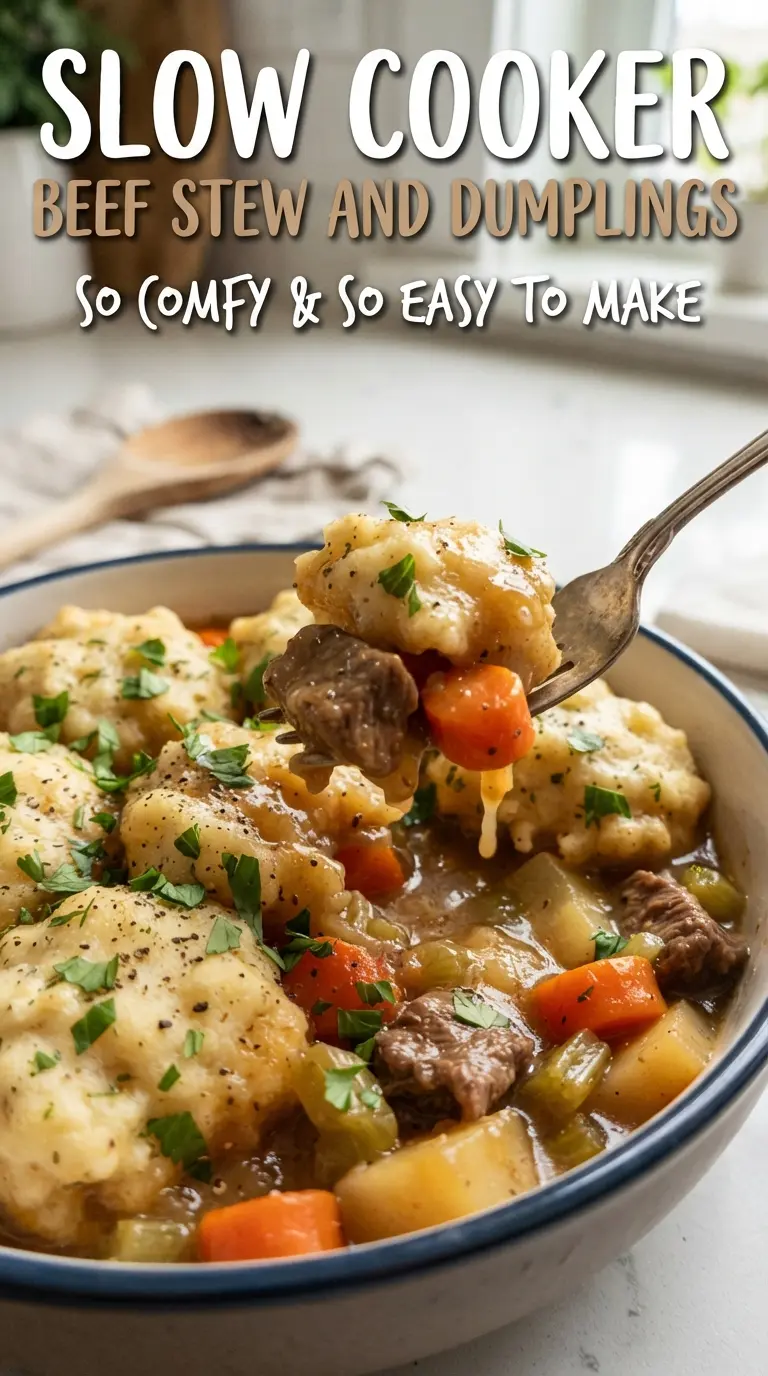
- Beef chuck — This is the right cut because it has enough connective tissue to turn tender after a long, slow cook. Leaner stew meat dries out before the stew gets the body you want.
- Flour — Tossing the beef in flour before browning gives you a light coating that thickens the broth as it simmers. Cornstarch won’t give the same round, stew-like finish.
- Tomato paste — Just two tablespoons add concentrated depth and help the stew taste slow-simmered. Cook it for a minute with the onions and garlic so it loses the raw edge.
- Baby potatoes — Halved baby potatoes hold their shape better than diced russets, which can collapse and muddy the broth. If you only have Yukon Golds, use them and cut them into large chunks.
- Bisquick, milk, and parsley — This trio makes the dumplings fast and dependable. The dough should be soft and spoonable, not stiff; if it’s too dry, the dumplings turn heavy.
Building the Stew Before the Dumplings Go On Top
Browning the Beef
Heat the oil until it shimmers, then brown the flour-coated beef in batches. You want real color on the outside, not gray edges, because that browning is what keeps the finished stew from tasting flat. If you dump all the beef in at once, the pan cools down and the meat steams instead of searing.
Letting the Slow Cooker Do the Heavy Lifting
Once the beef is in the slow cooker, add the onion, garlic, tomato paste, broth, Worcestershire, carrots, celery, potatoes, and thyme. Stir just enough to distribute everything, then leave it alone and cook on LOW for 8 hours. The beef should pull apart easily with a fork and the vegetables should be tender but not falling apart into mush.
Dropping and Steaming the Dumplings
Switch the cooker to HIGH, then mix the Bisquick, milk, and parsley into a soft dough. Drop tablespoons of dough over the hot stew in a loose layer; don’t press them down, because they need steam space to puff. Cover and cook for 30 to 35 minutes without lifting the lid. If you peek, the dumplings can collapse or turn gummy in the center.
Make It Gluten-Free with the Right Swap
Use a gluten-free all-purpose flour blend to coat the beef, then replace the Bisquick with a gluten-free baking mix that already contains leavening. The stew itself will hold up just fine, but the dumpling texture may be a little more delicate, so keep them on the larger side and don’t overmix the dough.
For a Deeper, More Winey Stew
Replace 1 cup of the beef broth with dry red wine after browning the beef and let it simmer for a minute before adding the remaining liquid. The flavor gets a little richer and more layered, but the stew will be slightly more assertive, so use a wine you’d actually drink.
Dairy-Free Dumplings
Swap the milk for unsweetened oat milk or plain almond milk. The dumplings still steam up tender, but oat milk gives a slightly fuller result than almond milk, which can taste thinner in the finished topping.
Storage and Reheating
- Refrigerator: Store leftovers for up to 4 days. The dumplings will soften as they sit, but the stew flavor gets even better.
- Freezer: The stew freezes well, but the dumplings soften a lot after thawing. If you plan to freeze it, freeze the stew base without the dumplings and make fresh ones later.
- Reheating: Warm gently on the stove or in the microwave until hot through. Don’t boil it hard, or the beef can dry out and the dumplings can turn rubbery.
Answers to the Questions Worth Asking
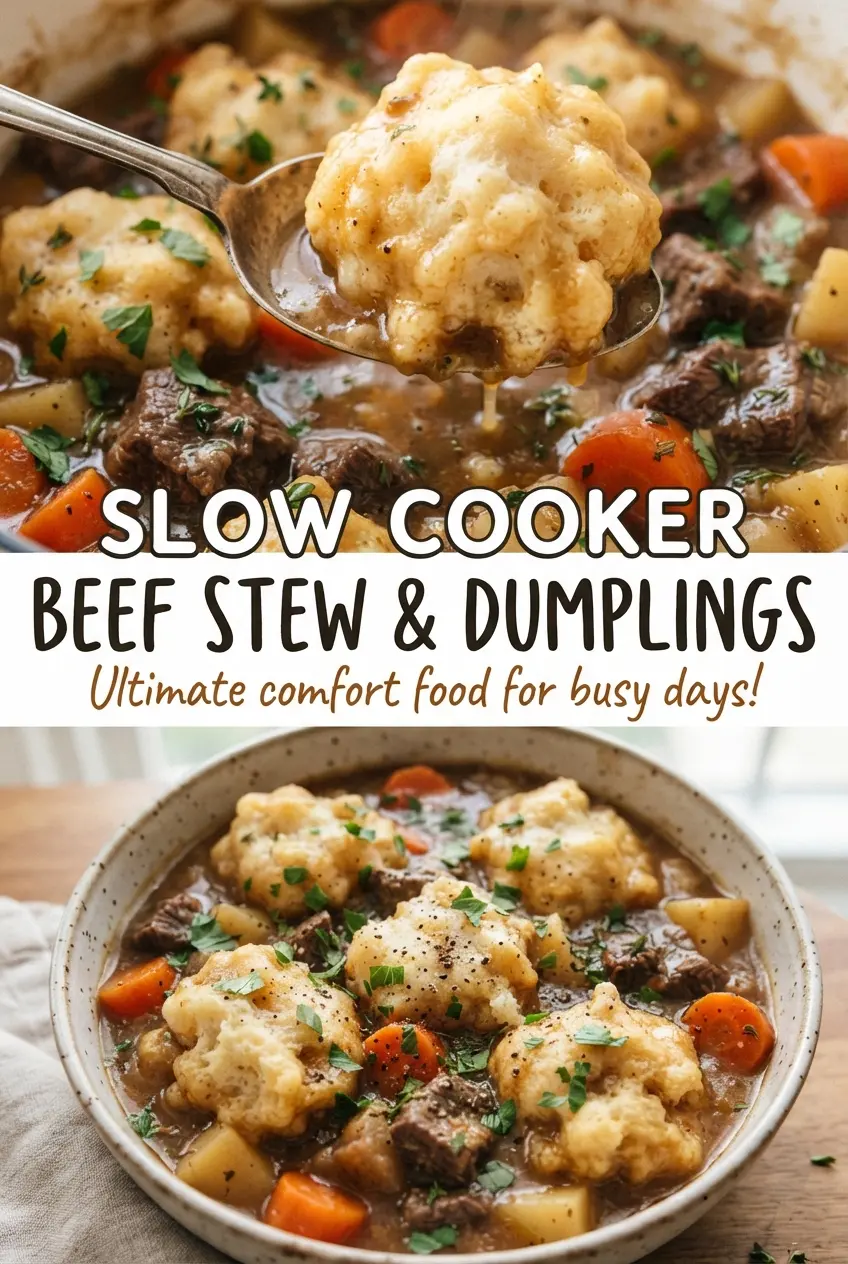
Slow Cooker Beef Stew and Dumplings
Ingredients
Equipment
Method
- Toss beef chuck with all-purpose flour, salt, and black pepper until evenly coated. Brown the beef in hot olive oil, then transfer to the slow cooker.
- Add onion, garlic, tomato paste, beef broth, Worcestershire sauce, carrots, celery, baby potatoes, and dried thyme to the slow cooker. Stir to combine.
- Cover and cook on LOW for 8 hours, until the beef is tender. Visual cue: the beef should shred easily when tested.
- Turn the slow cooker to HIGH, then stir Bisquick baking mix, milk, and fresh parsley into a soft dough. Visual cue: the dough should be thick but scoopable.
- Drop tablespoons of the dough over the hot stew in even spaced mounds. Avoid stirring so the dumplings stay on top.
- Cover and cook on HIGH for 30-35 minutes without lifting the lid until the dumplings are cooked through. Visual cue: the tops should look set and no wet batter remains.