Deep, spoonable beef stew is one of those dinners that earns a permanent place in the rotation because it gets better as it cooks. The beef turns fork-tender, the potatoes soak up the broth, and the carrots keep just enough bite to hold the whole bowl together. What makes this version stand out is the way it builds flavor in layers before it ever hits the slow cooker, so the finished stew tastes rich instead of flat.
Tossing the beef with flour before browning gives the broth a little body without turning it pasty, and the red wine does more than add depth — it loosens the browned bits from the pan so none of that flavor gets left behind. Tomato paste, Worcestershire, and thyme round everything out, while a touch of sugar keeps the wine and tomato from tasting sharp after hours on low heat.
Below, I’ve included the small details that matter most, from the browning step to the best way to keep the vegetables from going mushy. If you’ve ever had crockpot stew come out thin or dull, this method fixes both.
The broth thickened up beautifully and the beef was fall-apart tender after 8 hours on low. My husband kept going back for “just one more bowl” because the wine and tomato paste gave it such a deep, rich flavor.
Save this crockpot beef stew for a low-and-slow dinner with tender beef, red wine broth, and hearty potatoes.
The Browning Step That Gives This Stew Its Backbone
The biggest mistake with crockpot beef stew is skipping the sear or crowding the pan until the meat steams. You want browned edges, not gray cubes, because that deep crust is where the savory flavor starts. The flour on the beef does double duty here: it helps the meat brown, and it gives the stew just enough body once the juices release during the long cook.
Work in batches and give the beef space. If the pan looks wet, wait; if the meat sticks a little, let it sit another minute before turning it. Those browned bits on the bottom are supposed to happen, and the wine lifts them cleanly into the broth.
What Each Ingredient Is Actually Doing in This Stew
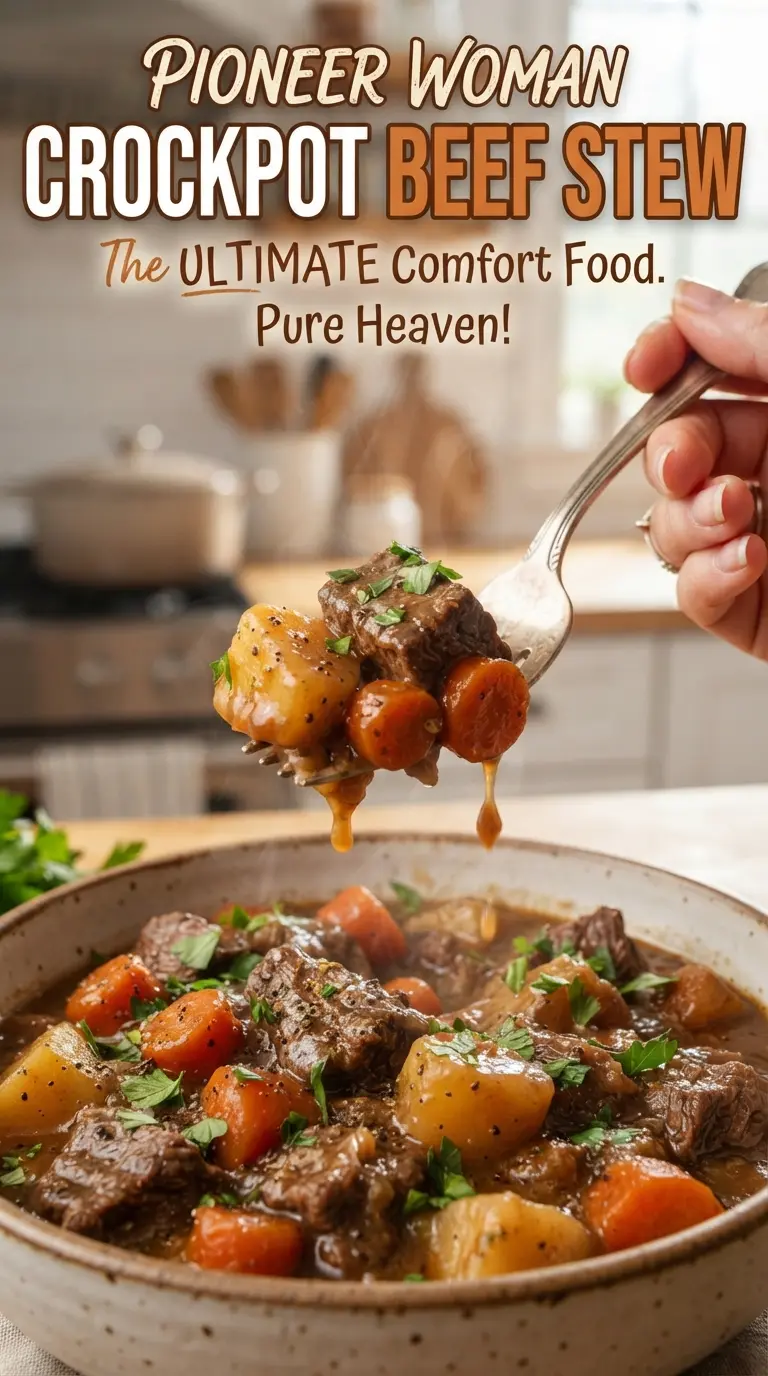
- Beef stew meat — Chuck or another well-marbled cut is what you want here. It starts a little tough and ends tender because the slow heat breaks down the connective tissue. Lean beef won’t give you the same rich texture.
- Red wine — This adds depth and helps deglaze the pan. Use something dry and drinkable, not sweet. If you don’t cook with wine, beef broth plus a teaspoon of balsamic vinegar gives you some of the same lift, though the flavor will be gentler.
- Tomato paste — It’s not there to make the stew taste like tomato. It adds concentration and color, and when it cooks briefly in the liquid it rounds out the broth instead of leaving it thin.
- Butter and olive oil — The olive oil handles the heat, while the butter adds a little richness and better browning. You need both for a sear that tastes full and not greasy.
- Baby potatoes and carrots — These hold their shape better than chopped russets or very thin carrot slices. Halve the potatoes so they cook through evenly without disappearing into the broth.
Building the Stew So the Slow Cooker Doesn’t Flatten the Flavor
Getting the Pan Flavor Into the Pot
After the beef is browned, cook the onion and garlic in the same pan until the onion turns translucent and the garlic smells sweet, not raw. Then pour in the wine and scrape every bit from the bottom; that dark residue is concentrated flavor, and leaving it behind makes the stew taste half-finished. Let the wine simmer for about 2 minutes so the sharp alcohol edge cooks off before it goes into the crockpot.
Layering the Broth
Once the wine mixture is in the slow cooker, stir in the tomato paste, broth, Worcestershire sauce, sugar, thyme, carrots, and potatoes. The sugar won’t make the stew taste sweet; it smooths the acidity from the wine and tomato paste. If the broth tastes thin at this stage, that’s normal — the long cook needs time to pull everything together.
Letting the Slow Cook Do Its Job
Cover and cook on LOW for about 8 hours, until the beef yields easily to a fork and the potatoes are tender all the way through. High heat works against this cut of meat and can make the edges stringy before the center softens. When it’s done, taste it before serving and add salt or pepper only if it needs it, since the broth will have reduced into something much deeper than it tasted at the start.
How to Adapt This Stew for Different Pans, Diets, and Leftovers
Gluten-Free Version
Swap the all-purpose flour for a 1:1 gluten-free flour blend or skip the flour entirely and brown the beef plain. You’ll lose a little thickening from the coating, but the stew still gets body from the potatoes and the long simmer. If you skip the flour, let the finished stew rest 10 minutes before serving so the broth settles a bit.
No-Wine Substitute
Use an equal amount of beef broth plus 1 tablespoon balsamic vinegar or red wine vinegar. You’ll keep the acidity that balances the broth, but you won’t get the same deep, rounded flavor that wine brings after it simmers. This version is a little softer and less complex, but still hearty.
Vegetable Add-In Swaps
Mushrooms, parsnips, or celery work well if you want to change the vegetable mix. Add softer vegetables later in the cook so they don’t dissolve into the broth, and keep root vegetables cut on the larger side so they hold shape. The more watery the vegetable, the less broth concentration you’ll get at the end.
Storage and Reheating
- Refrigerator: Store covered for up to 4 days. The broth thickens as it chills, which helps the flavor, but the potatoes soften a bit more each day.
- Freezer: This freezes well for up to 3 months. Cool it completely first, then freeze in airtight containers; the potatoes will be a little softer after thawing, but the stew stays satisfying.
- Reheating: Warm it gently on the stovetop or in the microwave at medium power. Don’t boil it hard, or the beef can tighten up and the potatoes can break apart.
Answers to the Questions Worth Asking
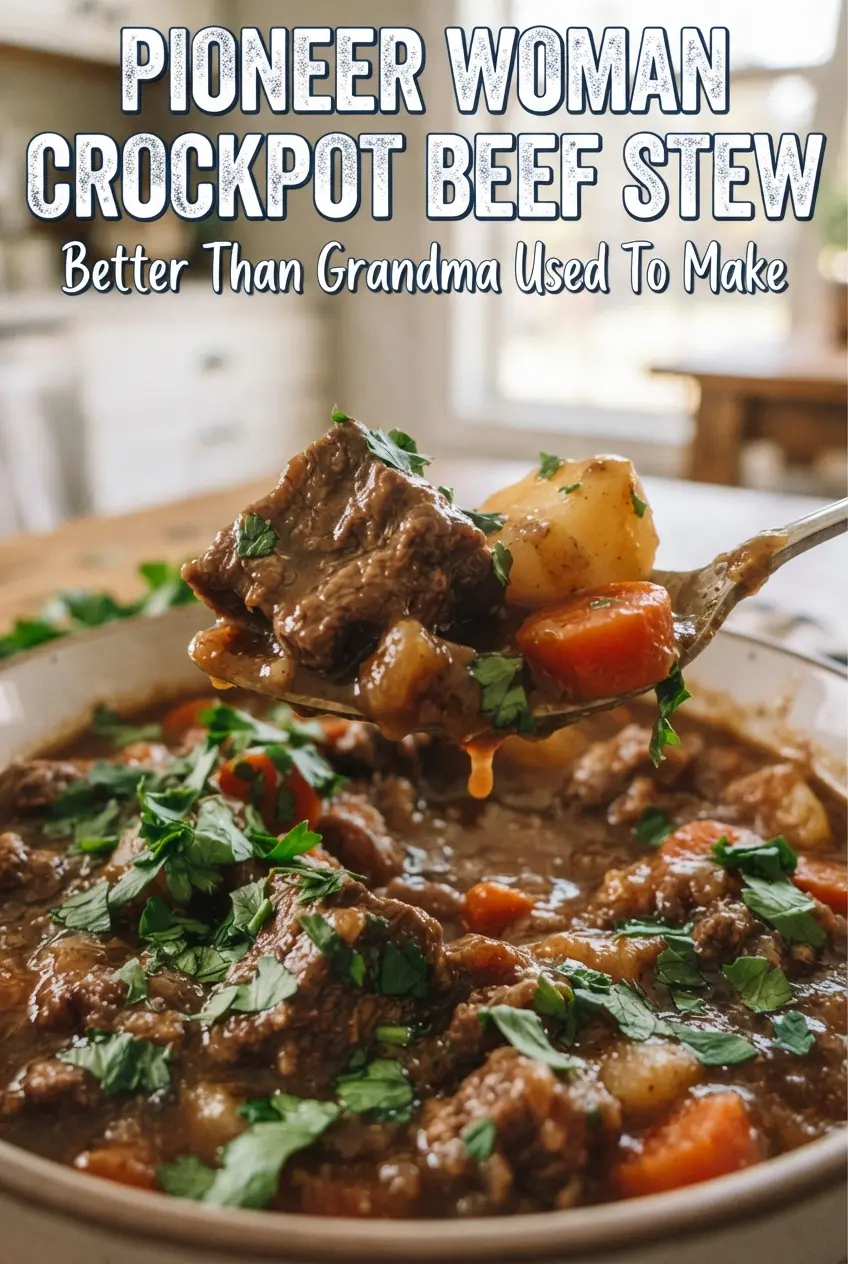
Pioneer Woman Crockpot Beef Stew
Ingredients
Equipment
Method
- Toss beef with all-purpose flour, salt, and black pepper. Brown in batches in olive oil and butter in a Dutch oven, then add the browned beef to the crockpot.
- Cook onion and garlic in the same Dutch oven for 3 minutes. Pour in red wine and scrape up the browned bits, then simmer for 2 minutes before transferring to the crockpot.
- Stir tomato paste, beef broth, Worcestershire sauce, sugar, dried thyme, carrots, and baby potatoes into the crockpot. Cover and cook on LOW for 8 hours until the beef is fork-tender.
- Season the stew to taste. Top with fresh parsley for a bright finish and serve hot.