
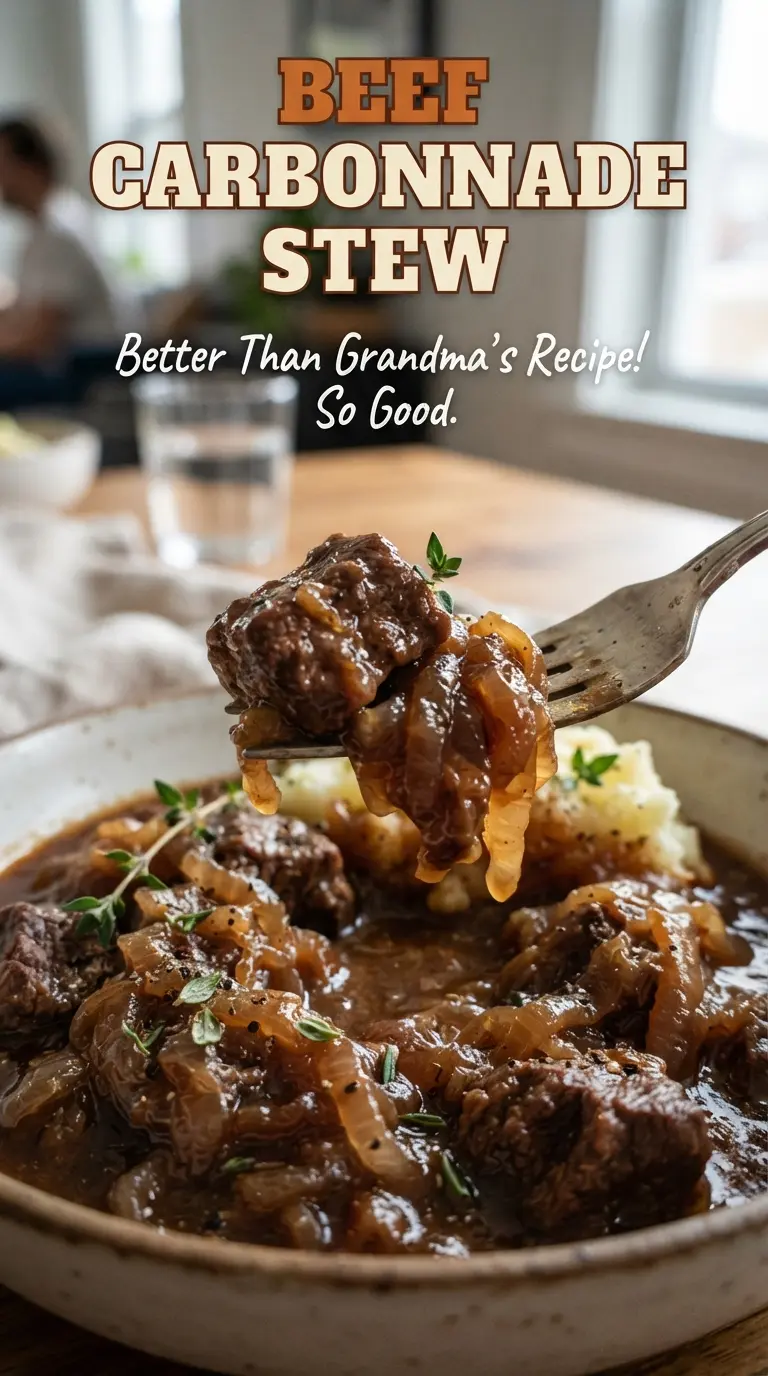
Beef carbonnade stew turns a few humble ingredients into something deep, glossy, and full of patience. The beef goes meltingly tender in the oven while the onions cook down into a dark, jammy base that tastes far richer than the short ingredient list suggests. The beer doesn’t just add flavor here; it gives the sauce that distinct Belgian edge — slightly malty, a little bitter, and perfect against sweet onions and mustard.
The trick is letting the onions take their time before anything liquid goes in. That long cook builds the color and sweetness that make carbonnade taste like carbonnade. Browning the beef in batches matters too, because crowded meat steams instead of searing, and you want those browned bits on the bottom of the pot to help season the braising liquid.
Below, I’ve laid out the one part that most often gets rushed, plus a few smart swaps if you need to use a different beer or make this ahead. It’s the kind of stew that rewards attention early and pays you back at the table.
The onions turned deep and sweet without burning, and after 3 hours the beef was spoon-tender with that rich beer gravy my husband kept dipping bread into.
Love the dark beer sauce and tender beef? Save this Belgian carbonnade stew for the next time you want a slow-braised dinner with deep onion flavor.
The Onion Stage That Makes Carbonnade Taste Right
Most of the flavor in beef carbonnade stew comes from the onions, not the beef. If they only soften, the stew tastes flat and sweet in a one-note way. Let them cook until they turn a deep golden brown and collapse into the pan; that’s where the color and savoriness come from.
The other non-negotiable is scraping the pot after the beer goes in. Those browned bits from the beef and onions dissolve into the braising liquid and give the sauce its depth. If the bottom looks too dark before you add the liquid, lower the heat rather than rushing ahead — burnt fond will stay bitter all the way through the stew.
What Each Ingredient Is Actually Doing in This Stew
- Beef chuck — This cut has enough connective tissue to turn silky after a long braise. Leaner stew meat won’t give you the same spoon-tender texture, and it can dry out before the sauce is ready.
- Belgian brown ale — This is the backbone of the sauce. A dark lager or brown ale can work in a pinch, but avoid anything sharply hoppy, because bitterness gets louder as the liquid reduces.
- Onions — Four large onions sound like a lot, but they cook down into the body of the stew. Slice them thinly and evenly so they melt at the same pace instead of leaving stringy pieces behind.
- Dijon-spread bread — This is the old-school thickener and flavor builder. The bread dissolves into the braise and the mustard sharpens the sweetness from the onions, so don’t skip it unless you plan to add another thickener at the end.
- Apple cider vinegar — Just enough acid to wake up the richness. It keeps the stew from tasting heavy after a long oven braise.
Building the Braise So the Beef Stays Tender
Browning the Beef in Batches
Season the beef first, then brown it in two or three small batches so each piece has space against the pot. You want a dark crust, not gray meat sitting in steam, because that crust becomes part of the final sauce. If the pot starts to smoke aggressively, lower the heat a little; too much heat burns the butter before the beef has time to color.
Cooking the Onions Past Softness
Add the remaining butter and the onions after the beef comes out, then let them cook for a full 20 minutes, stirring often and scraping the bottom as they pick up the browned bits. They should look deep golden and slightly sticky before the sugar and flour go in. If they’re still pale, keep going — pale onions make a pale stew.
Setting Up the Braising Liquid
Pour in the ale, broth, and vinegar and scrape the pot until the bottom is clean. Stir in the thyme and bay leaves, then add the beef back with any juices from the plate. Lay the mustard bread on top, mustard side down, and press it lightly into the liquid so it starts breaking down right away.
Finishing in the Oven
Cover the pot and bake until the beef yields easily when pressed with a spoon. Stir once partway through, after the bread has started dissolving, to keep the sauce even. If the stew looks loose at the end, let it sit uncovered on the stove for a few minutes; it thickens as it rests.
How to Adapt This Stew Without Losing the Character of the Dish
Gluten-Free Version
Swap the bread for a gluten-free loaf or leave it out and thicken the finished stew with a cornstarch slurry. The flavor stays rich, but you lose the old-fashioned bread-thickened body, so add the slurry slowly at the end until the sauce coats a spoon.
No Belgian Ale on Hand
A malty brown ale or dark lager is the closest stand-in. Skip anything overly bitter or citrusy, because the stew reduces for hours and those sharp notes become more pronounced than you expect.
Dairy-Free Adaptation
Use olive oil or a neutral cooking oil instead of butter. The stew will still braise beautifully, but you’ll lose a little of the roundness that butter brings to the onion base, so let the onions cook fully until they’re deeply caramelized.
Make-Ahead Friendly
This stew tastes even better the next day after the flavors settle. Cook it a day ahead, chill it, then reheat it gently so the sauce stays smooth and the beef doesn’t tighten up.
Storage and Reheating
- Refrigerator: Keeps well for 4 days. The sauce thickens as it chills.
- Freezer: Freezes well for up to 3 months in an airtight container. Thaw overnight in the fridge before reheating.
- Reheating: Warm it gently on the stove over low heat with a splash of broth or water if needed. High heat can tighten the beef and make the sauce separate around the edges.
Answers to the Questions Worth Asking
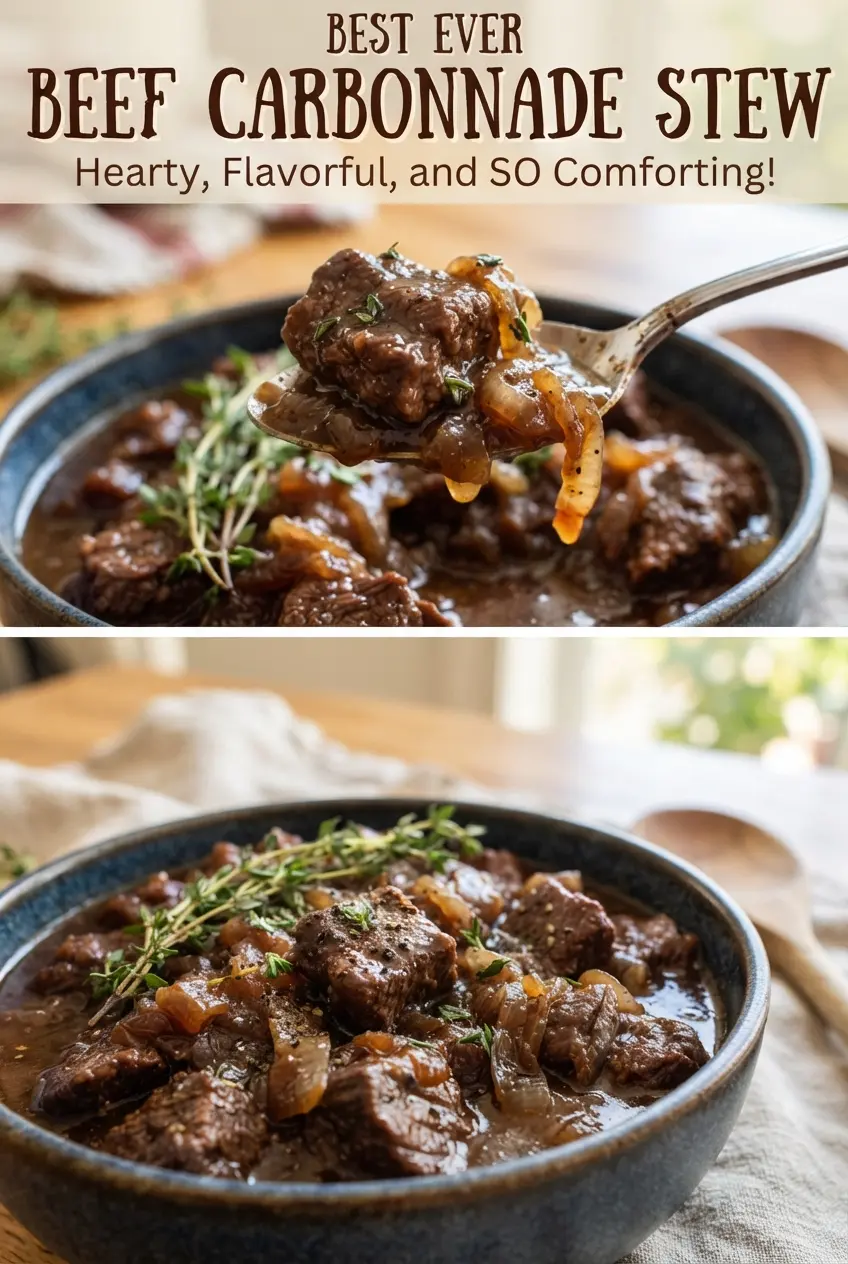
Beef Carbonnade Stew
Ingredients
Equipment
Method
- Preheat oven to 325°F. Season the beef chuck with salt and black pepper.
- Heat 2 tablespoons butter in a Dutch oven over medium-high heat and brown the beef in batches. Cook until browned on all sides, then transfer to a plate.
- Add the remaining 1 tablespoon butter and the thinly sliced onions to the Dutch oven. Cook for 20 minutes until deep golden, stirring as needed for even browning.
- Stir in the brown sugar and all-purpose flour. Cook for 1 minute to coat the onions and thicken slightly.
- Pour in the Belgian brown ale, beef broth, and apple cider vinegar while scraping the bottom of the pot. Add fresh thyme and bay leaves, then return the beef and any juices to the Dutch oven.
- Lay the mustard-spread bread on top of the stew, mustard side down. Cover the Dutch oven with its lid.
- Bake for 2 1/2 hours at 325°F, stirring once the bread dissolves. Continue baking until the beef is very tender, with a thick, glossy sauce.
- Remove the fresh thyme and bay leaves from the stew. Taste and adjust seasoning if needed.
- Serve the beef carbonnade hot with fries or mashed potatoes. Spoon the dark beer-braised beef and caramelized onions over the sides.


