
Bright cranberry orange relish cuts through rich holiday food with sharp citrus, a clean tart bite, and just enough sweetness to keep it balanced. It’s the kind of side that wakes up a plate of roast turkey, but it also works beside ham, biscuits, leftover sandwiches, or spooned over cream cheese with crackers. The texture matters here: finely chopped, not smooth, so every bite still has a little pop from the cranberries.
The trick is keeping the orange in play instead of stripping it down. The whole seeded orange goes in with the cranberries, peel and all, which brings in oils from the zest and a touch of bitterness that keeps the relish from tasting flat or candy-sweet. A short pulse in the food processor gives you control; if you keep going, you’ll end up with paste instead of relish. The chill time is just as important, because the sugar softens the cranberries and pulls everything together into a spoonable texture.
Below you’ll find the small details that make this relish taste bright instead of harsh, plus a few ways to adapt it if you want it less sweet or a little more grown-up.
I liked that it stayed chunky after chilling instead of turning watery. The orange flavor came through without making it taste bitter, and it was even better the next day with turkey.
Save this cranberry orange relish for the meals that need a bright, chunky side with sharp citrus and a clean tart finish.
The Reason Cranberries and Orange Need a Short Chop, Not a Purée
The biggest mistake with cranberry relish is overprocessing. Cranberries release a lot of juice as soon as their skins break, and if you keep the processor running, you’ll end up with a loose, sludgy mixture instead of a bright relish with texture. A few quick pulses give you tiny pieces that still hold their shape after chilling.
The orange matters just as much. Leaving the peel on brings in fragrant oils and a little bitterness, which keeps the relish from tasting one-note. Seed the orange well before chopping, though, because even a few seeds can add harshness fast. After mixing, the sugar pulls moisture from the fruit and softens the sharp edges, so don’t judge the flavor until it’s had its chill time.
What the Orange Liqueur Changes in the Bowl
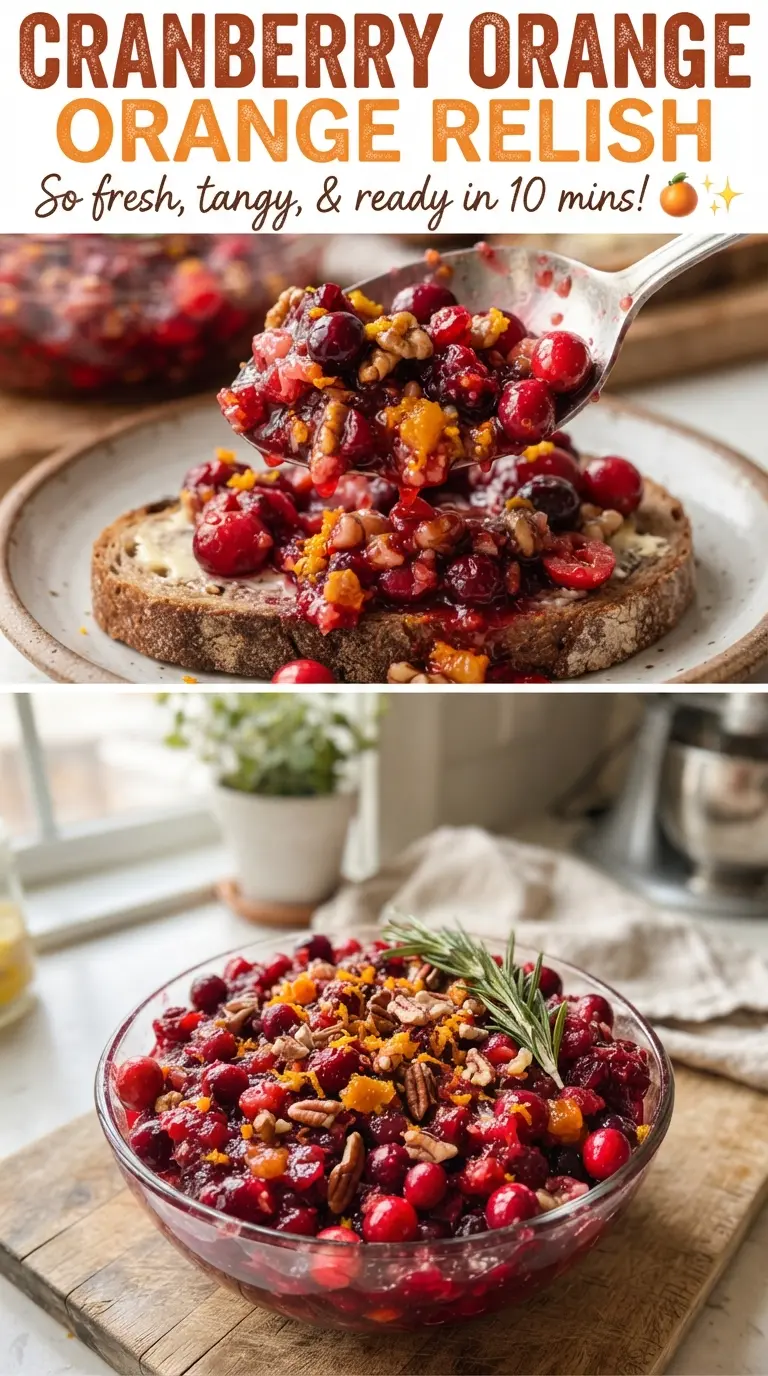
- Fresh cranberries — These bring the tart backbone and the texture that makes relish feel lively. Fresh works best because the berries chop cleanly and hold some structure after chilling. Frozen cranberries can be used straight from frozen if that’s what you have; they’ll chop a little softer, but the final result still works.
- Navel orange, unpeeled — The peel is part of the flavor here. It gives the relish the fragrance and slight bitterness that balance the sugar. Use a sweet, seedless-style navel orange if you can find one; if your orange is especially thick-skinned, trim away any extra-pithy bits before chopping.
- Sugar — This is what turns the mixture from sharply tart to spoonable and balanced. The sugar also draws out juices as the relish rests, which is why the texture improves after chilling. If you cut the sugar too much, the relish will taste aggressive and the fruit won’t soften the same way.
- Orange liqueur or orange juice — Liqueur adds a deeper citrus note and a little warmth, but juice gives you a clean nonalcoholic version that still tastes bright. Use juice if you want a family-friendly side, and add it in the same amount. Either way, don’t skip this ingredient entirely; it helps the relish feel rounded instead of just tart and sweet.
How to Build the Brightest Relish Without Turning It Watery
Pulse, Don’t Process
Add the cranberries and orange chunks to the food processor and pulse in short bursts. You’re looking for a fine chop with visible pieces, not a smooth paste. If the bowl starts looking wet or jam-like, stop immediately; that means the fruit has gone too far and the finished relish will lose its clean, fresh texture.
Mix the Sugar In After Chopping
Transfer the chopped fruit to a bowl before adding the sugar, orange liqueur or juice, and salt. Stir just until the sugar disappears into the fruit and juices start coating everything. If you add sugar before chopping, the processor can turn the fruit mushy faster, and the mixture won’t hold that lively, crunchy edge.
Let the Chill Time Do the Work
Cover the bowl and chill it for at least 4 hours, though overnight gives you the best texture and balance. During that rest, the sugar softens the cranberries and the flavors meld, so the orange tastes integrated instead of sharp on top. Stir again before serving; the juices settle at the bottom, and that final mix brings everything back together.
Finish With Mint Right Before Serving
Use fresh mint as garnish only at the end. If you add it too early, it darkens and loses its clean aroma. A few torn leaves or a small sprig are enough to make the bowl look fresh and give each spoonful a light herbal lift.
How to Adapt This Relish When You Want It Less Sweet, More Citrus, or Alcohol-Free
Alcohol-Free Cranberry Orange Relish
Use orange juice instead of orange liqueur. You’ll still get the citrus lift, just without the faint boozy warmth that liqueur adds. The flavor stays bright and family-friendly, and the texture doesn’t change at all.
Less Sweet, More Tart
Drop the sugar to 1/2 cup if you want a sharper relish that leans more savory. It’ll taste brighter and less candylike, but it also won’t mellow the cranberries as much, so the finished relish will stay more assertive. That works well with rich meats and salty cheeses.
Make-Ahead Holiday Side Dish
This relish actually gets better after a night in the fridge. The cranberry pieces soften, the orange flavor spreads through the bowl, and the sugar finishes dissolving into the juices. Stir it well before serving and add the mint at the last minute so it still looks fresh.
Using Frozen Cranberries
Frozen cranberries work if that’s what’s in your freezer. Pulse them straight from frozen, then let the mixture thaw and rest in the fridge with the sugar mixed in. The texture ends up a little softer, but the flavor stays lively and the result is still worth serving.
Storage and Reheating
- Refrigerator: Store covered for up to 5 days. It firms up slightly as it sits, then loosens again after stirring.
- Freezer: It freezes well for up to 2 months, though the orange pieces soften after thawing. Freeze in a tightly sealed container and thaw overnight in the refrigerator.
- Reheating: No reheating needed. Serve it cold or cool room temperature, and stir before plating so the juices and fruit are evenly distributed.
Answers to the Questions Worth Asking
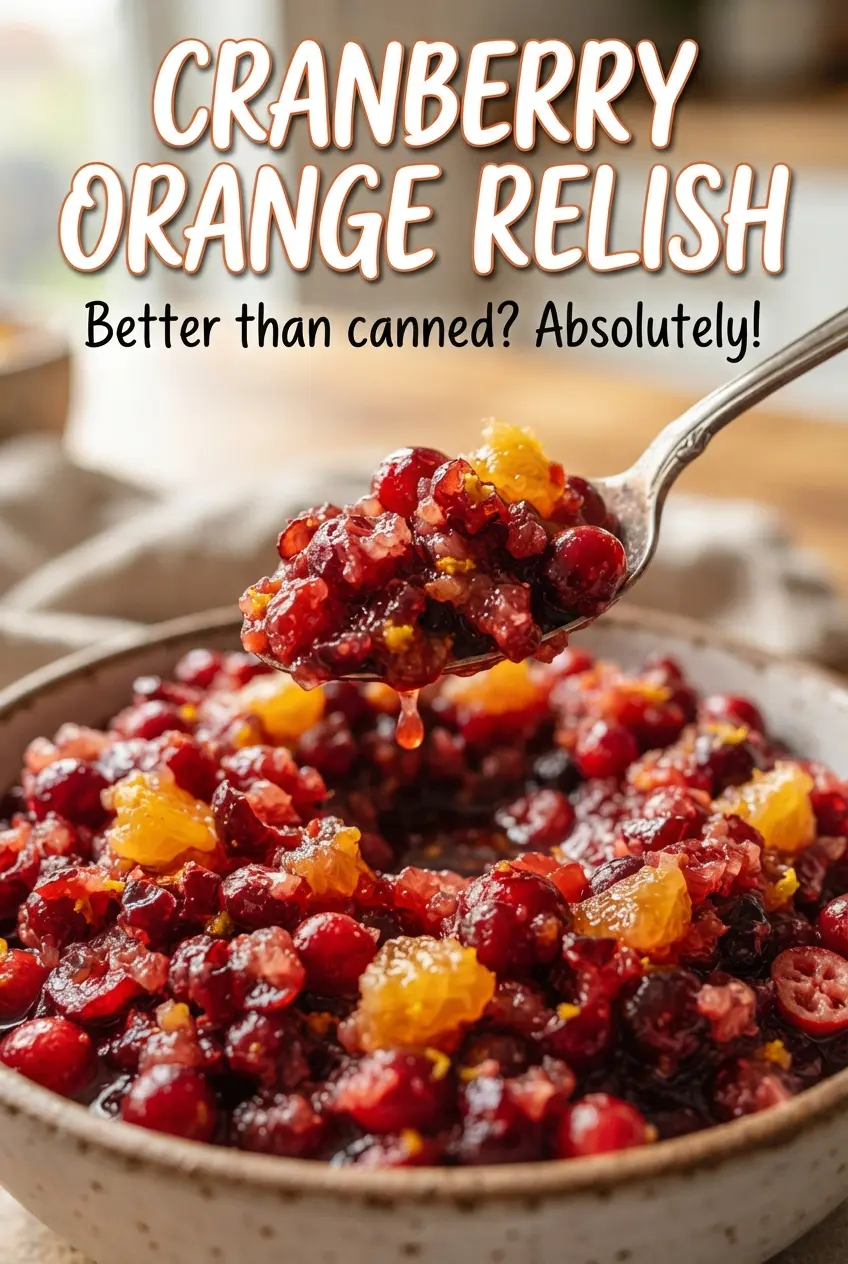
Cranberry Orange Relish
Ingredients
Equipment
Method
- Pulse the fresh cranberries and the large navel orange chunks in a food processor until finely chopped but not pureed, 8-12 pulses. Stop and scrape down the processor as needed for even, chunky texture.
- Transfer the chopped mixture to a bowl and stir in the sugar, orange liqueur (or orange juice), and salt until the sugar looks fully moistened, about 1 minute. The mixture should hold its fine-chopped texture rather than turning smooth.
- Cover the bowl and chill in the refrigerator at 0-4°C for at least 4 hours or overnight. The relish will thicken slightly and the flavors will blend as it sits.
- Stir well before serving so any released juices distribute evenly throughout the relish. Garnish with fresh mint just before serving for a bright, fresh finish.


