
Glossy, sticky, and just smoky enough from the grill, these Honey Garlic Asian Chicken Kabobs hit that sweet-savory spot that keeps people reaching for one more skewer. The chicken stays juicy, the pineapple softens and caramelizes at the edges, and the glaze clings in that shiny way that makes these look as good as they taste.
The trick is in the marinade balance. Honey gives you that lacquered finish, but it needs soy sauce, rice vinegar, and ginger to keep it from turning flat or cloying. I also reserve part of the marinade before the chicken goes in, so the basting sauce stays clean and safe for the grill. That one small step makes a big difference in both flavor and food safety.
Below, I’ll walk through the part that matters most: how to keep the kabobs from drying out before the glaze thickens and starts to char in the best way. I’ve also included a few smart swaps, because this is the kind of recipe that should work for your grill, your pantry, and your schedule.
The glaze turned out thick and glossy, and the chicken stayed juicy even after grilling. I loved how the pineapple caramelized without getting mushy, and the reserved marinade made the kabobs taste like takeout in the best way.
Honey Garlic Asian Chicken Kabobs with sticky glaze and caramelized pineapple are made for grilling nights.
The Marinade Needs a Clean Split Between Flavor and Basting Sauce
This recipe only works smoothly if you reserve some marinade before the chicken touches it. Once raw chicken has been in the bowl, the leftover liquid can’t go back on the finished kabobs unless it’s cooked hard enough to be safe, and that usually means more hassle than it’s worth. Pull out a quarter cup first, and you get a clean basting sauce that stays glossy and bright on the grill.
The second thing to watch is the sugar in the honey. Honey burns faster than people expect, especially over medium-high heat, so these kabobs need a hot grill and short turns, not a long, slow roast. You want caramelized edges and sticky glaze, not dark bitter spots.
What Each Ingredient Is Actually Doing in These Kabobs
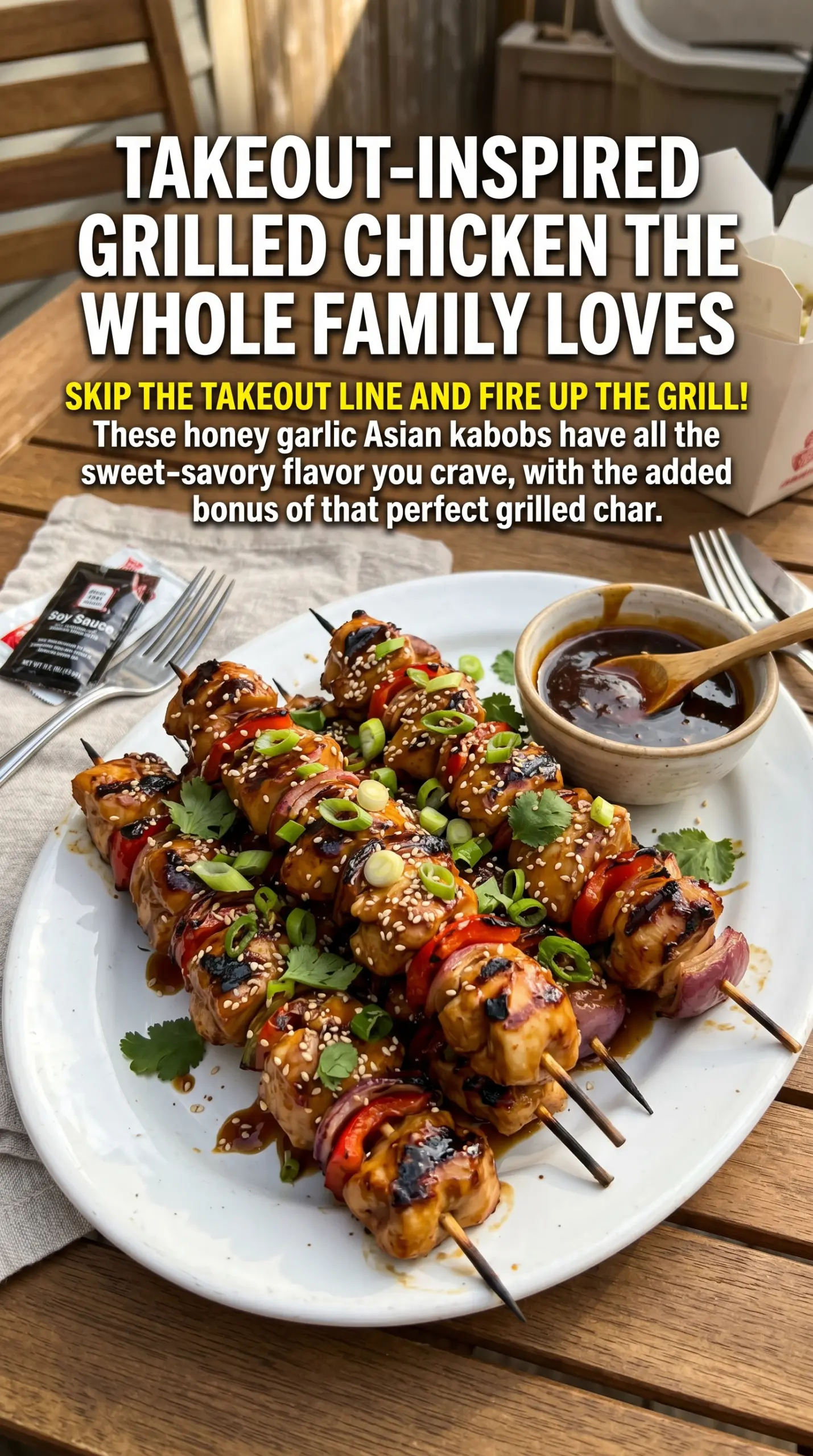
- Chicken breasts — They stay lean and pick up the marinade quickly, which is why this recipe moves fast. Cut them into even chunks so they cook at the same pace; uneven pieces are the fastest way to end up with dry edges and underdone centers. Chicken thighs work too, and they stay a touch juicier if you want a richer bite.
- Honey — This is what gives you the lacquered finish and that sweet edge people expect from teriyaki-style skewers. There isn’t a true swap that behaves exactly the same on the grill, but maple syrup can stand in if needed; the flavor shifts earthier and it browns a little differently.
- Soy sauce — It brings salt, depth, and that savory backbone that keeps the honey from tasting one-note. Use regular soy sauce unless you need low-sodium; low-sodium works fine, but the glaze will taste a little less punchy until you reduce the salt elsewhere.
- Rice vinegar and ginger — These two cut through the sweetness and keep the marinade lively. If you skip them, the kabobs can taste heavy and sticky instead of balanced. Fresh ginger matters here because the bright heat shows up through the glaze after grilling.
- Pineapple, peppers, and onions — These aren’t just filler on the skewer. Pineapple caramelizes and helps echo the sweet glaze, while peppers and onions bring structure and a little charred bite. Cut everything into similar-sized pieces so the vegetables finish at the same time as the chicken.
Building the Glaze Without Burning the Kabobs
Whisk the marinade until the honey fully dissolves
Start with the honey, soy sauce, garlic, rice vinegar, sesame oil, and ginger in a bowl and whisk until the mixture looks smooth and loose, not streaky. If the honey sits in ribbons at the bottom, it won’t coat the chicken evenly. The marinade should smell sharp, sweet, and garlicky all at once.
Marinate just long enough for flavor, not mushiness
One to four hours is the sweet spot. Less than that and the chicken won’t pick up much flavor; much longer and the acid from the vinegar starts working against the texture. Keep it covered in the fridge, and stir once if you pass the two-hour mark so every piece stays coated.
Thread the skewers with even spacing
Build each skewer with chicken, pepper, onion, and pineapple pieces that are close in size. Don’t jam everything tightly together or the centers steam instead of grill. A little space between pieces lets heat move around the kabobs and gives you those browned edges that make the whole dish better.
Grill hot and turn with intent
Lay the kabobs over medium-high heat and leave them alone long enough to get color before turning. Baste with the reserved marinade while they cook, but stop a minute or two before they’re done so the glaze can set instead of staying wet. The chicken is ready when it reaches 165°F and the edges look caramelized, with pineapple that has darkened spots and softened slightly.
Chicken Thighs for a Juicier Kabob
Swap the chicken breasts for boneless skinless thighs if you want a slightly richer, more forgiving kabob. Thighs handle the grill a little better and stay juicy even if you go a minute past perfect, though they won’t slice quite as cleanly as breast meat.
Gluten-Free Version
Use tamari or a certified gluten-free soy sauce in place of regular soy sauce. The flavor stays close, and the glaze still clings the same way, so this is an easy swap that doesn’t change the texture of the finished kabobs.
Dairy-Free and Pantry-Friendly
This recipe is naturally dairy-free, so there is nothing extra to remove. If you don’t have rice vinegar, use apple cider vinegar in a pinch; the acidity is a little sharper, but the kabobs still balance the honey and soy nicely.
Make It Spicier
Add a pinch of crushed red pepper flakes or a spoonful of chili garlic sauce to the marinade. That extra heat cuts through the sweetness and gives the glaze more edge, especially if you’re serving this with plain rice.
Storage and Reheating
- Refrigerator: Store leftovers in an airtight container for up to 4 days. The glaze may thicken a bit as it chills, but the flavor holds well.
- Freezer: Cooked kabobs freeze reasonably well if you pull the meat and vegetables off the skewers first. Freeze in a sealed container for up to 2 months; pineapple softens a little after thawing, but the flavor stays good.
- Reheating: Warm gently in a skillet over medium-low heat or in the oven at 325°F until heated through. High heat dries out the chicken fast, so avoid blasting them in the microwave unless you don’t mind a firmer texture.
Answers to the Questions Worth Asking
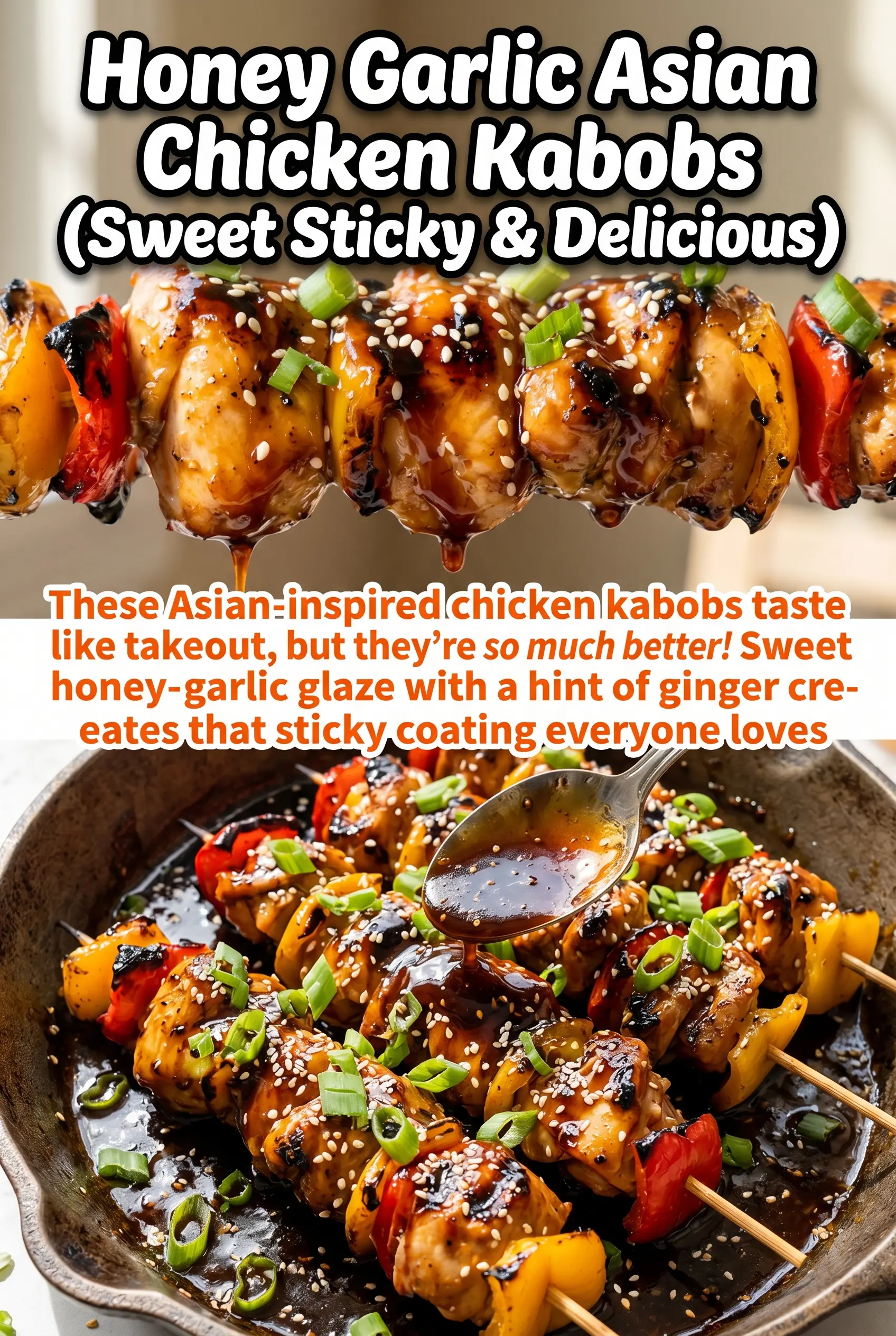
Honey Garlic Asian Chicken Kabobs
Ingredients
Equipment
Method
- Whisk together honey, soy sauce, garlic, rice vinegar, sesame oil, and ginger until smooth and glossy, about 1 minute.
- Reserve 1/4 cup of the marinade in a separate container for basting during grilling.
- Marinate the chicken for 1-4 hours, covered, in the refrigerator at 40°F or below, so the pieces absorb the sweet soy glaze.
- Thread chicken, bell peppers and onions, and pineapple chunks onto soaked wooden skewers, spacing pieces evenly.
- Grill kabobs over medium-high heat, about 400°F, for 5-6 minutes per side with the lid closed when possible.
- Baste with the reserved marinade during grilling so the surface turns sticky and caramel-brown.
- Garnish the grilled kabobs immediately with sesame seeds and green onions for a fresh, bright finish.


